Tadeusz Kościuszko: Soldier of Liberty in Poland and America
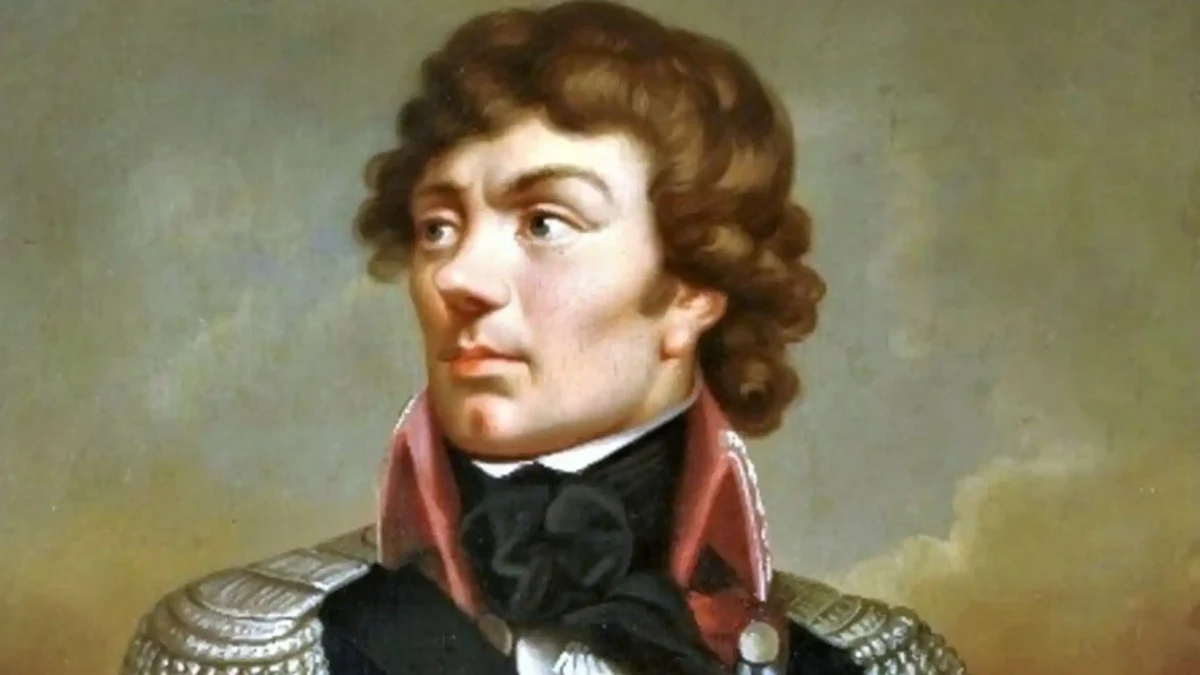
Tadeusz Kościuszko (1746-1817) sits at the meeting point of two histories: the crisis and collapse of the Polish-Lithuanian Commonwealth, and the birth of the United States. He was a professional soldier and military engineer, but also a figure later turned into a national symbol. Below is a concise, factual overview of what he did, what he argued for, and why his reputation travelled so widely.
Tadeusz Kościuszko in the American Revolutionary War: engineer, strategist, outsider
Kościuszko came to North America as a trained military engineer. In 18th‑century warfare, that meant surveying ground, designing defensive works, and organising field fortifications under pressure. This work was rarely glamorous, but it often decided whether an army could hold a position and survive a campaign.
He was not a senior political leader of the Revolution, and he was not the overall commander of American forces. His value lay in practical competence: using terrain, construction, and logistics to make limited manpower more effective. As a foreign officer, he also began as an outsider and had to earn trust through results rather than status.
The Kościuszko Uprising (1794): what he fought for and why it failed
The Kościuszko Uprising of 1794 was an armed attempt to defend and reform what remained of the Polish-Lithuanian Commonwealth under intense external pressure. Kościuszko took leadership when the strategic balance was already unfavourable and the state’s resources were strained.
In simple terms, he fought for political self-determination and reforms intended to strengthen the country’s capacity to resist domination. The failure was not a single “mistake” so much as a structural problem: opposing powers had greater military and financial strength, and the Commonwealth lacked time and unity to match them. Courage could not compensate for shortages, divided politics, and overwhelming force.
Kościuszko’s early life and education: from Mereczowszczyzna to the Warsaw Cadet Corps
Kościuszko was born in Mereczowszczyzna in 1746, in the Grand Duchy of Lithuania within the Polish-Lithuanian Commonwealth (the site lies in present-day Belarus). That matters because modern national labels do not map neatly onto the Commonwealth’s territories. His background reflects a state that was multi-regional and politically complex.
A key step in his formation was the Warsaw Cadet Corps (Corps of Cadets). It aimed to modernise education for future officers and public servants, combining military training with a wider civic curriculum. For Kościuszko, it built a foundation that later translated into credible service abroad.
Was Kościuszko Polish? Identity, language and “nationality” in the 18th century
The question “Was he Polish?” depends on what “Polish” is taken to mean. In the 18th century, modern nationality as a fixed legal identity was not the dominant framework. People’s sense of belonging could be political (loyalty to the Commonwealth), regional, religious, and social, with language important but not always decisive.
Kościuszko is best understood as a figure of the Polish-Lithuanian Commonwealth whose life was later claimed by several national narratives. Poland remembers him as a patriot and reform-minded commander; the United States remembers him as a capable foreign supporter of the Revolution. Later commemorations often simplify a world that, in his lifetime, did not fit today’s categories.
Between France, Switzerland and exile: the post‑1794 years and European politics
After 1794, Kościuszko’s life was shaped by exile and the disappearance of the Commonwealth from the map. This was not a voluntary “grand tour”, but the reality of defeat and political constraint. His movements and choices were closely tied to the priorities of stronger European powers.
Polish hopes frequently attached themselves to France during the revolutionary and Napoleonic period, but support for Polish aims was often conditional and self-interested. Kościuszko was cautious about projects that used Polish soldiers without offering a credible route to restored statehood. Switzerland became associated with his later years, reflecting a search for stability and safety in a turbulent Europe.
Kościuszko’s political ideals: liberty, serfdom, and his stance on slavery
Kościuszko’s reputation rests partly on the moral content of his politics. In the Commonwealth, the position of peasants and the system of serfdom were central realities, and any reform threatened entrenched interests. His public stance pointed towards a broader concept of civic community than was comfortable for many elites.
In the United States, he encountered a republic built on liberty while tolerating slavery. His remembered positions have contributed to an image of him as consistently opposed to human bondage. At the same time, it is important to keep the period in view: he was an 18th‑century officer, not a modern campaigner, and his influence was expressed through example, relationships, and political statements more than formal power.
Afterlife and remembrance: how Kościuszko became a symbol in Poland, the US and the UK
Kościuszko’s “afterlife” is almost a second career, written in monuments, anniversaries, and school narratives. In Poland, he became a reference point for patriotic virtue, especially in eras when sovereignty was lost or contested. In the United States, he represents practical international support for the Revolution and the idea that the American cause attracted committed allies.
In the UK, his presence is usually indirect: through wider interest in European struggles for constitutional government and, later, Polish diaspora memory. Symbolic figures are always simplified. To understand Kościuszko historically, it helps to hold together both sides of the story: genuine achievements and the limits imposed by the politics and power of his time.