Polish historical figures
These profiles look at well-known Poles through the records a genealogist would use: parish registers, noble genealogies, emigration papers and later biographies. Each one is written as a worked example, showing what the surviving documents can confirm, where family legends differ from the records and which archives hold the evidence.
-
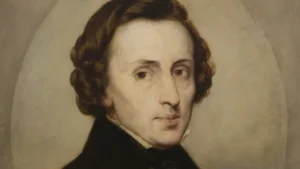
Fryderyk Chopin’s Family Tree: A Genealogical Guide to His Polish Roots
Tracing Fryderyk Chopin’s ancestry is a rewarding exercise because it sits at the crossroads of real, surviving documentation and the practical realities of research in Poland: parish…
-
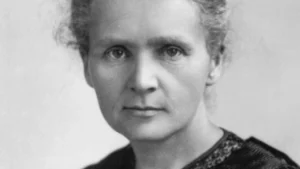
Maria Skłodowska-Curie: A Detailed Look at Her Polish Origins and Early Life
Maria Skłodowska-Curie is one of Poland’s best-known historical figures, yet tracing her family in records is more than a “famous-person biography” exercise: it is a…
-
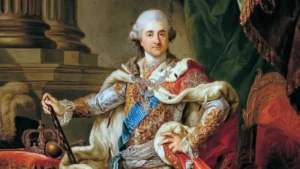
Stanisław August Poniatowski: Tracing the Poniatowski Line Through Genealogical Records
Tracing the lineage of Stanisław August Poniatowski (1732-1798), the last King of the Polish-Lithuanian Commonwealth, requires careful comparison of surviving records. The challenge is not…
-
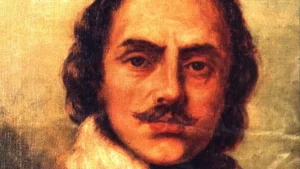
Kazimierz Pułaski (Casimir Pulaski) Genealogy: Family’s Polish Origins
Kazimierz Pułaski is one of the best-known “Polish names” in early United States history - yet from a genealogical perspective, his story is also a…
-
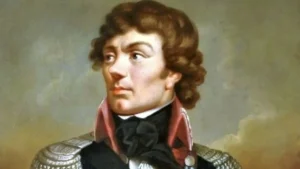
Tadeusz Kościuszko: Soldier of Liberty in Poland and America
Tadeusz Kościuszko (1746-1817) sits at the meeting point of two histories: the crisis and collapse of the Polish-Lithuanian Commonwealth, and the birth of the United…
Using famous lives as examples
What a famous family tree can teach you.
Public figures make useful teaching cases because their families have been studied for generations. The same kinds of record apply to ordinary families: a baptism entry in a parish register, a marriage in the same parish a generation earlier, a noble family proven in heraldic sources or a departure recorded in emigration papers. Comparing a well-documented life with your own evidence makes it easier to see what a record can and cannot prove.
Many British families have also heard that they are related to a famous Pole. Such a claim can be tested like any other link: start with your own documented line and work back one generation at a time, rather than starting from the famous person and working forwards.
For wartime examples with a British connection, see the profiles of Marian Rejewski, who broke Enigma in the 1930s, Krystyna Skarbek, who served with British SOE, and General Stanisław Maczek, who settled in Scotland after 1945.
Testing a family connection to a famous Pole
- Document your own line back to the earliest ancestor you can prove.
- Note that ancestor’s place and religion. Parish and civil registers are kept by place and, in many regions, by faith.
- Treat surnames with care. Many Polish surnames are shared by unrelated families. See Polish surname meanings and spellings.
- For claims of noble descent, check heraldic and legitimation sources: Polish nobility records.
- Treat published family trees as leads until you have seen the original entries.
Common questions
Does sharing a surname with a famous Pole mean we are related?
Not on its own. Many Polish surnames arose independently in different places, and spellings changed over time. A connection has to be shown through records that link each generation.
Where are old Polish parish registers kept?
Depending on their age and region, registers are held by the parish itself, a diocesan archive or the Polish State Archives. The guide to Polish church records explains where to look.
Can you research a family legend for us?
Yes. We start from your documented family line and test the link generation by generation, then report what the records confirm and what they do not. See our family history research packages.