Polish School Certificates and Records
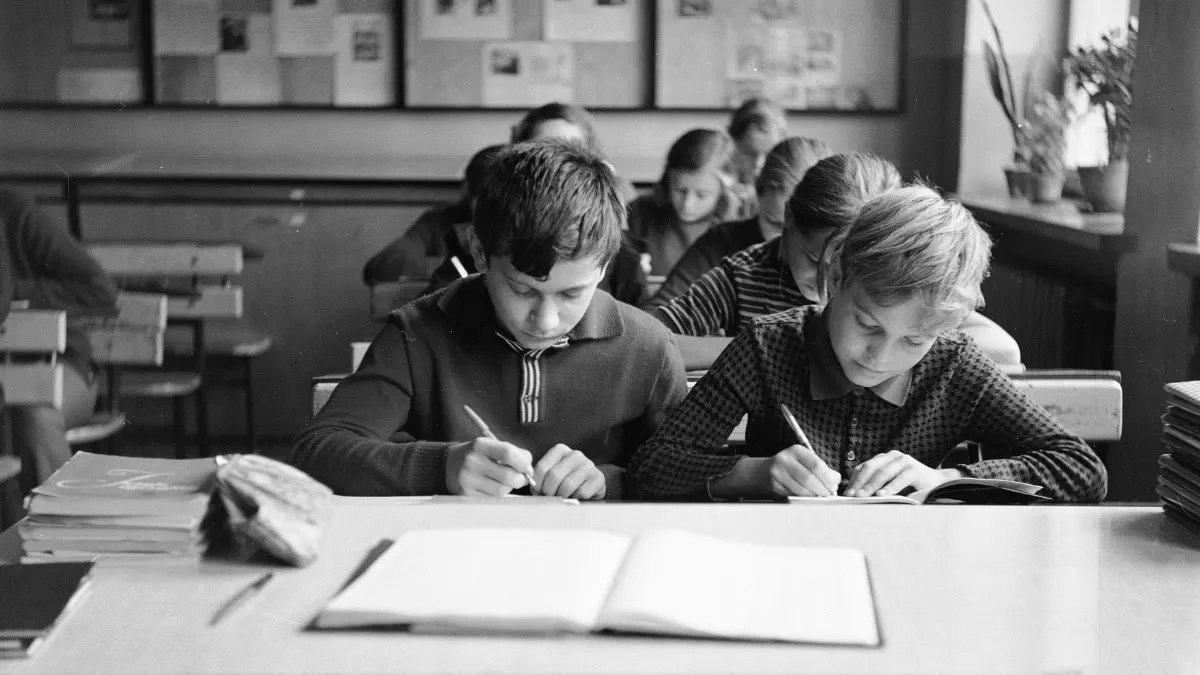
School paperwork is easy to overlook in Polish family history. A certificate, a register entry or a class list can give a birthplace, confirm parents’ names, explain a move or show a family’s religion and social standing, and it sometimes survives where the civil or church record does not. The difficulty is that Polish school records are spread across several kinds of repository, survive unevenly and are subject to privacy limits that catch many overseas researchers by surprise.
Types of historical Polish schools
What counted as a school depended on the period and the region. Poland’s schools were run successively by the partitioning powers, the Second Polish Republic, the German and Soviet occupiers and the post-war People’s Republic, and each changed the names and the paperwork.
Elementary schools were called szkoła powszechna between the wars and szkoła podstawowa later; earlier sources use the terms of the partitioning power. Gymnasiums and lyceums, the academic secondary schools of the towns, produced the fullest records: admissions, examinations and class lists. Vocational schools appear under many names (industrial, craft, railway, agricultural, commercial) and can show an occupation that a marriage record never mentions. Teacher-training colleges (seminarium nauczycielskie) and other specialist schools often kept orderly administrative files. Schools run by parishes or religious orders are more likely to be documented in church or diocesan archives, where access is at the archive’s discretion.
During the Second World War the German occupiers closed Polish secondary schools and restricted elementary teaching, while clandestine classes carried on in secret; in the east the Soviet authorities reorganised schools on their own model. Wartime school papers are therefore often incomplete, moved, or buried in general occupation-era administrative collections rather than filed under the school’s name.
School records follow the administration that ran the school. A school could be municipal, state, religious or private at different times, and its papers may have moved more than once, especially after 1945.
What a school certificate reveals
For the late nineteenth and twentieth centuries a certificate or school register can be surprisingly informative. Entries can give:
- the pupil’s full name, sometimes in more than one language in former German or Russian areas
- date and place of birth, down to the village and district
- parents’ names and occupations, and in later records the mother’s maiden name
- religion, particularly in older systems and church schools
- the family’s address, which places them between births, marriages and deaths
- years attended, class, promotions and repeated years
- examination marks and conduct, which help to separate namesakes
- language of instruction and, in some periods, declared nationality
- transfers to other schools, which can explain why a family vanishes from one parish
A certificate held by the family may be a later extract rather than the original. The admission books, grade books and examination registers behind it do not always survive, and an archive that issued a copy will not necessarily open the underlying files.
Searching for student lists in local archives
Which institution holds a school’s records depends on the school’s status, the period and what happened when it closed or merged. The state archives (Archiwa Państwowe) hold fonds of education authorities, municipalities and closed schools, including inspection records with class lists and statistical returns; these are often catalogued under the supervising body, not the school. For recent decades, records may sit with the body that ran the school (organ prowadzący), usually the local council. A school that still exists, or its successor, may keep old registers on site. Church schools are documented in diocesan or parish archives, and well-known gymnasiums and teacher-training colleges sometimes have material in university, museum or regional library collections.
Archive catalogues seldom use the words “student list”. The search usually goes through the supervising authority, the town council or the school inspectorate, and then into the right series of admissions, examinations or correspondence. Survival is also patchy, with gaps from war losses, reorganisation, fires and routine disposal.
“Grandfather went to school in Kraków” is not enough to start from. A search needs a span of years, a town or district and some idea of the type of school: gymnasium, vocational or elementary.
Records of gymnasiums and vocational schools
Gymnasiums and vocational schools kept formal, centralised paperwork. Where it survives, it can include admission applications (sometimes with a birth extract attached), registers and class lists, examination protocols and final certificates (the świadectwo dojrzałości in academic schools), letters to and from parents, and disciplinary or health notes, which are not always open to researchers.
Many schools changed name, profile or building several times, particularly between 1939 and 1950, and the archive may list the school under a later or earlier name. Older registers can be in Polish, German or Russian, with names spelt to suit the language of the administration. Twentieth-century registers also name people who may still be alive, so archives may restrict full registers and release only what concerns your ancestor.
An enquiry that names the likely series and dates gets an answer far more often than a request for everything about a grandfather.
Teachers’ personal files and documentation
For a teacher or school administrator, personnel records can stand in for missing vital records, especially across the war and the years after it, when people were displaced and paperwork was rebuilt. They include service files with appointments, postings, promotions and disciplinary matters, evidence of training and examinations, biographical questionnaires (more common in later systems) and, in some cases, verification papers from the post-war reorganisation of schools.
These files may be in a state archive within an education authority’s fonds, among a school’s inherited papers or in other administrative records. They hold detailed personal information about family, health and employment, so archives sometimes provide extracts or confirmations rather than full copies.
For family history, the most useful item in a teacher’s file is often the exact birthplace or date of birth, which identifies the civil registry office or parish where the birth record should be.
Tracking an ancestor’s early education
Early schooling can bridge gaps for people who emigrated, served in the forces, changed their surname or came from areas where the war destroyed other records.
The search begins with what the family already holds: certificates, school reports, captioned class photographs, a pupil’s identity card (legitymacja), memoirs, letters, or a school stamp on some other document. A town and a window of two or three years make a large difference. From there the question is which body now holds the records, bearing in mind that wartime and post-war changes often moved files away from the school, and which spellings and languages the name may appear in.
We identify the institution that holds your ancestor’s school records, use the Polish administrative terms the archives use, and frame enquiries to fit how each archive searches its holdings. The results come to you in an English-language report.