Kazimierz Pułaski (Casimir Pulaski) Genealogy: Family’s Polish Origins
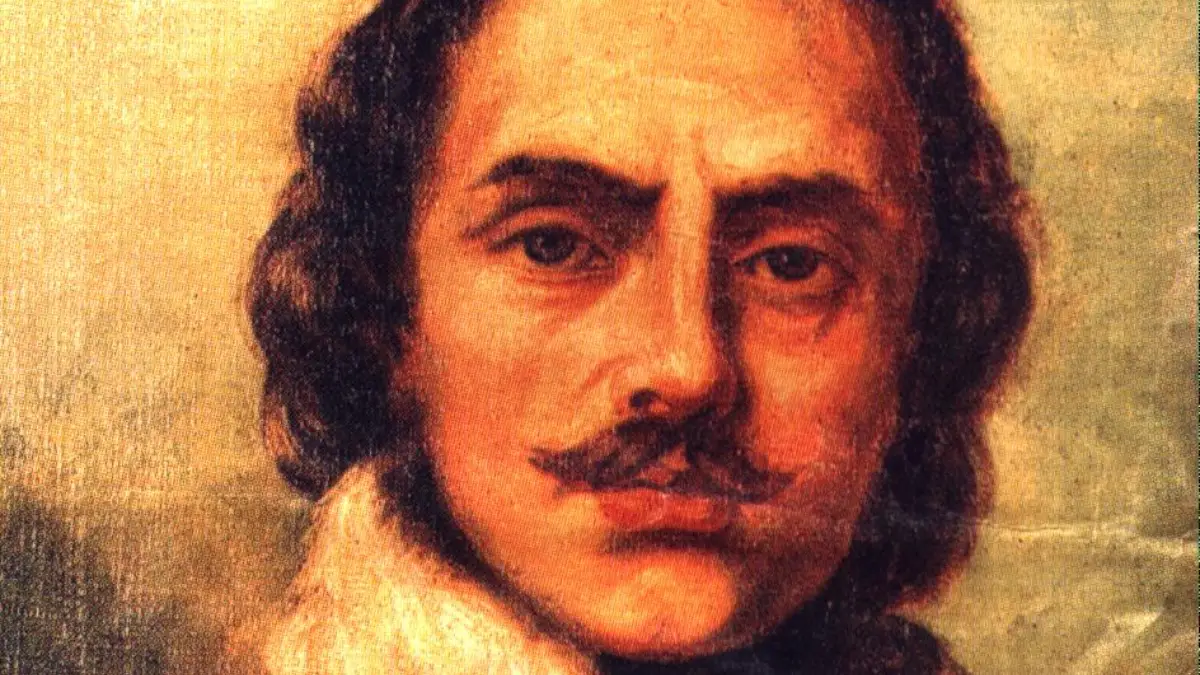
Kazimierz Pułaski is one of the best-known “Polish names” in early United States history - yet from a genealogical perspective, his story is also a useful lesson in how Polish sources work (and where they stop). In this article I focus on what can be documented about Pułaski’s origins in the Polish-Lithuanian Commonwealth, how nobility and heraldry intersect with family history, and what the surviving record trail realistically allows us to conclude.
Was Casimir Pulaski Polish?
Yes - Kazimierz Pułaski was a Polish nobleman (a member of the szlachta) from the Polish-Lithuanian Commonwealth, active in Polish political-military life before leaving for Western Europe and then North America. His Polish identity is not a matter of family legend; it is supported by contemporary Polish context (his father’s public roles and the family’s involvement in the Bar Confederation) as well as later institutional historiography.
From the point of view of genealogy, the more interesting question is usually not “was he Polish?”, but rather:
- Which Pułaski line is this, and how is it evidenced?
- Which localities and jurisdictions generated the records?
- What was the family’s social-legal status, and what does that change about the sources?
Those questions determine whether you can move from “a famous historical figure” to a properly evidenced family reconstruction.
Pulaski Family Origins in 18th‑Century Poland: Place, Status, and Background
Pułaski’s immediate family is strongly associated with Warsaw (as the place of his birth) and with Mazovia / the Warka area (closely linked with the family’s offices and later remembrance). Multiple reputable Polish institutional sources describe him as born in Warsaw in 1745, while the family’s standing is consistently described as noble and connected to the Ślepowron arms.
From a Polish research perspective, it matters that this is 18th-century elite research:
- You are not relying only on parish registers (though they can be crucial).
- You often need to combine church records, land and court materials, Sejm/office-related references, and later compiled scholarship.
- Records may be scattered due to later upheavals (Partitions, wars, and purposeful destruction), and the survival of originals is uneven.
A practical point for readers researching their own Pułaski connection: the surname “Pułaski” exists beyond the single famous line, and “shared surname + coat of arms claim” is not proof of close kinship. You need document-to-document linkage - especially when nobility is involved.
Parents of Casimir Pulaski: Józef Pułaski and Marianna Zielińska (What We Can Document)
The parental couple is widely and consistently given as:
- Józef Pułaski (Polish noble; associated with public office and with the Bar Confederation), and
- Marianna (from the Zieliński family).
Where genealogists must be careful is how “Marianna Zielińska” is used in secondary writing. “Zieliński/Zielińska” is a very broad Polish surname, and in the 18th century you can encounter multiple Zieliński lines (including unrelated ones) across neighbouring regions. Treat the maternal surname as a starting point for targeted record work (marriage, dowry/property, guardianship, court mentions), not as a final answer.
What a professional can often do faster here is identify (a) which specific Zieliński line is meant in the best scholarship and (b) which archival fonds are most likely to hold corroborating materials - without wasting months on false-positive Zieliński families.
Siblings and Close Kin: Building a Reliable Pulaski Family Group Sheet
Genealogically, a “group sheet” is where you either become rigorous - or you start repeating internet errors.
A commonly cited sibling set for Kazimierz includes two brothers and six sisters, with the brothers given as Franciszek (born 1743) and Antoni (born 1747), alongside sisters named Wiktoria, Joanna, Józefa, Monika, Paulina, and Małgorzata.
Two practical cautions for readers:
- Names are not enough. In Polish sources you must expect:
- variant spellings (Pułaski / Pulaski),
- Latinised forms in church books,
- and repeated given names across generations.
- Sibling lists are often copied without record-level proof. The right way to treat a sibling list is as a research agenda: each person should be tied to evidence (baptism entries, burial entries, marriage contracts, dowry provisions, court mentions, etc.). If you are building a proof-standard lineage (for publication, citizenship/heritage matters, or lineage societies), that distinction is decisive.
Polish Nobility and the Ślepowron Coat of Arms: What Heraldry Does (and Doesn’t) Prove
The Pułaski family is commonly described as a noble family of the Ślepowron coat of arms.
However, Polish heraldry works differently from the popular “one surname = one coat of arms” assumption:
- In Poland, a single coat of arms could be shared by many unrelated or distantly related families (a heraldic clan system).
- Conversely, the same surname can appear under different coats of arms in different lines.
So what does Ślepowron actually do for genealogy?
It helps you frame the search (noble context; heraldic literature; land/court record expectations), but it does not prove that every Pułaski worldwide is closely related to Kazimierz’s immediate family.
If you have a family tradition of “we were Ślepowron nobility”, the correct next step is not to paste a coat of arms into a family tree. The correct step is to commission (or carry out) a structured verification: which locality, which generation, which documents link your ancestors to a specific noble line?
From the Bar Confederation to Exile: How Family and Politics Collided
Pułaski’s genealogy cannot be cleanly separated from politics because his family - especially his father - was deeply involved in the Bar Confederation (a major political-military movement of the late 1760s/early 1770s).
For genealogists, this matters in a very practical way:
- Political involvement can generate non-routine documents: correspondence, court proceedings, confiscations, exile-related paperwork, lists of participants, and later rehabilitations.
- It can also create “gaps”: families in flight, property disrupted, records created in one jurisdiction and stored in another, or later losses.
A note on wartime realities (including the Second World War): although Pułaski lived long before 1939-1945, modern researchers are affected by WWII because many Polish archives and municipal record stores suffered destruction, displacement, and post-war reorganisation. That is why even “famous” families can have frustratingly uneven survival of original documentation - and why professional triage (where to look first, and what substitutes exist) often saves substantial time.
Did Pulaski Leave Descendants? Marriage Rumours, No Confirmed Children, and the Genealogical Takeaway
The mainstream historical position is clear: Pułaski never married and left no descendants.
In genealogical practice, this is a valuable teaching point. Prominent figures frequently attract:
- later romantic stories,
- mistaken identity with similarly named individuals,
- and “descendant” claims that rely on surname alone.
The correct takeaway is not merely “there were no children”, but how to handle the question:
- Distinguish documented facts (e.g., no confirmed marriage/issue in reliable scholarship) from family lore.
- If a client believes they descend from Pułaski, the professional task is typically to (a) build the client’s lineage back with solid evidence, and (b) test whether any connection exists to the wider Pułaski kin network - not to chase sensational claims first.
In other words: the realistic route is usually collateral research (siblings, cousins, property ties), not a direct father-to-son line from Kazimierz himself.
Casimir Pulaski’s Honorary United States Citizenship (1998): What It Means - and What It Doesn’t
Pułaski was granted honorary United States citizenship posthumously by federal law in 2009 (not 1998). The U.S. Senate’s reference list shows Casimir Pulaski under Public Law 111-94 with the year 2009, and the text of that public law is available in public sources.
So what does this mean genealogically?
- It is an honour and a commemorative act, reflecting his significance to U.S. history.
- It is not evidence of ancestry, identity, or family linkage for modern claimants.
- It does not create any special genealogical “entitlement” to records in Poland, nor does it replace the need for evidence-based lineage work.
If your goal is to document Polish ancestry connected to noble lines, political movements, or famous individuals, the fastest progress usually comes from a disciplined source strategy in Poland (and often in multiple jurisdictions), rather than from repeating biographical summaries.