Fryderyk Chopin’s Family Tree: A Genealogical Guide to His Polish Roots
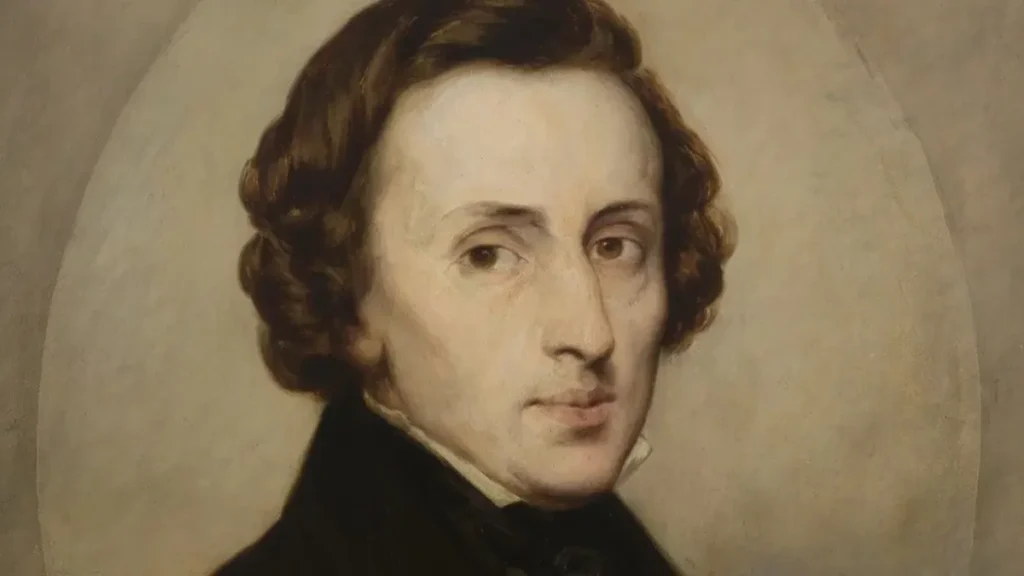
Tracing Fryderyk Chopin’s ancestry is a rewarding exercise because it sits at the crossroads of real, surviving documentation and the practical realities of research in Poland: parish registers, civil registration, shifting administrations, language changes, and-later in the family’s story-the disruptions of modern history. This guide explains what we can reliably say about Chopin’s roots, what records underpin that knowledge, and how similar documentation can be obtained for your own Polish family lines.
The French-Polish Roots: Fryderyk Chopin’s Family Background
Chopin’s identity is often described as “Polish, with a French father”-and genealogically that is an accurate starting point. His father, Mikołaj (Nicolas) Chopin, was French-born in Lorraine (today: Grand Est, Vosges) and later built his life in Polish lands under partition.
His mother, Justyna (Tekla Justyna) Krzyżanowska, came from the Polish szlachta (nobility) milieu-though not the wealthy magnate class people sometimes imagine. Her documented background is Polish and rooted in the realities of late-18th-century provincial life, including service within landed households.
For genealogists, Chopin is a useful “model case” because:
- His core life events occurred in an area where Catholic parish registers and Napoleonic-style civil registration entries can be highly informative when they survive.
- His family story spans multiple jurisdictions (French Lorraine; the Duchy of Warsaw; later Congress Poland), which mirrors what many clients face when their ancestors moved across borders that did not stay still.
Searching for Records: Where was Chopin Born and Baptised?
Chopin is associated with Żelazowa Wola as his birthplace, and the key documentary trail runs through the parish of Brochów (Masovia region). In practice, when we research a person born in early 19th-century Polish lands, we often look for two parallel record types:
- Parish baptism entry (church register, usually Latin in this era)
- “Civil” birth entry recorded by the parish priest acting as a registrar under the Napoleonic system (often in Polish, sometimes with formulaic administrative language)
For Chopin, sources describe a baptismal register entry dated 23 April 1810, and an official birth-registration style entry recorded in the Brochów parish context that states the child was born 22 February 1810 and given the names Fryderyk Franciszek.
A crucial genealogical lesson here is that even for famous individuals, you may encounter date discrepancies in secondary accounts (for example, some popular sources repeat 1 March 1810). The robust approach is always to privilege the contemporary register entry (and then explain why later narratives drift).
If you are looking for comparable records for your own family, the “where” usually comes down to the parish and civil registration locality that served the village at the time. That, in turn, depends on historical administrative boundaries-which is why professional help can save weeks of misdirected searching.
The Justyna Krzyżanowska Line: Chopin’s Maternal Polish Ancestry
Justyna’s line demonstrates another typical Polish research pattern: noble-status families whose paper trail is partly in parish registers and partly in landowner / estate context, rather than tidy “one office holds everything” record-keeping.
Published biographical and historical materials identify Justyna (Tekla Justyna) Krzyżanowska’s parents as Jakub Krzyżanowski and Antonina Kołomińska, and note her christening in Izbica Kujawska (Kujawy region).
What matters in practice for your own maternal-line research in Poland:
- Women often appear under maiden names in marriage and baptism records, but spelling can be inconsistent.
- You may need to follow the family across parishes if there was movement linked to service, leases, or estate employment.
- “Szlachta” status does not automatically mean rich archives; it may simply influence how the family is described in records (honorifics, social category, witnesses).
If your goal is to document a maternal line rigorously, a professional researcher will typically correlate baptisms, marriages, burials, and witnesses across multiple parishes-especially where families repeat given names across generations.
Nicolas Chopin: From Lorraine to the Heart of Poland
Nicolas (Mikołaj) Chopin is usually described as being born 15 April 1771 in Marainville-sur-Madon (Vosges, Lorraine) and later settling in Polish lands, where he worked as a teacher of French and became part of local educated society.
From a genealogical perspective, his story is a reminder that:
- Cross-border ancestry often requires two research systems: French civil/parish records for the Lorraine origins, and Polish ecclesiastical/civil-style registers for life events in Poland.
- Migrants can leave traces in unexpected places (employment records, school records, patronage networks), but the foundation is still usually baptism/marriage/death documentation.
If your own ancestor arrived in Poland from abroad (or left Poland for Britain, the United States, Australia, France, Germany, etc.), the key is identifying the first Polish locality where they appear in a record with a usable birthplace clue.
Genealogical Challenges: Spelling Variants of the Chopin Name
Even with a relatively “simple” surname like Chopin, record reality bites. In Polish parish/civil entries of the period you can encounter phonetic spellings and Polonised forms, and the same person may appear with different variants depending on the clerk and language. One cited example in an official-style entry is the father’s surname written as “Chopyn”.
For Polish genealogy generally, spelling variation is not an inconvenience-it is a core methodological issue:
- Language shifts: Latin (older parish registers), Polish (Napoleonic-era civil-style entries), Russian (later 19th century in Congress Poland), German (Prussian areas), and occasional French.
- Diacritics and transliteration: modern databases may omit Polish characters; Russian records may require back-transliteration.
- Name “normalisation”: modern biographies often standardise spellings that were not standardised at the time.
Professionally, this is handled by searching variant sets rather than a single “correct” spelling, and by tracking the family through consistent identifiers (place, occupation, spouse, witnesses, house/estate context).
Mapping Chopin’s Family History: Key Archives and Locations
Chopin research is geographically concentrated, which makes it a good illustration of how Polish repositories are typically layered:
- Parish of Brochów: central for baptism/marriage context connected with Żelazowa Wola.
- Żelazowa Wola / Sochaczew area (Masovia): locality context for birth and early family life; historical descriptions often tie the family to the estate setting.
- Warsaw: important for later life events, death records, burials, and a wider documentary footprint (education, employment, networks), depending on the research question.
- Lorraine (Vosges), France: for Nicolas Chopin’s origin documentation and earlier generations.
What this means for “ordinary” Polish-family research (including wartime realities)
Many families do not enjoy Chopin’s level of published attention, and in the 20th century-especially during the Second World War (1939-1945)-records could be destroyed, displaced, or fragmented. In practical terms, that means:
- You may need to combine surviving parish registers, civil registration copies, and state archive holdings.
- For some towns and villages, the record trail is incomplete and requires alternative strategies (collateral relatives, witness networks, residence patterns, cemetery evidence, post-war administrative files where accessible).
Professional help: obtaining the right documentation efficiently
If you want to move from “I’ve read about it” to “I have certified extracts / scans / reliable evidence for my tree”, it is often worth commissioning research-particularly when you are outside Poland, do not read Polish, or your problem involves multiple repositories and privacy restrictions.
As a Poland-based professional genealogist, I can help you: identify the correct parish or registry jurisdiction, check archival catalogues and finding aids, request or retrieve copies where possible, and build a documented proof trail that stands up to scrutiny (rather than a collection of unverified online hints).