General Haller’s Blue Army: Tracing Polish Volunteers from WWI
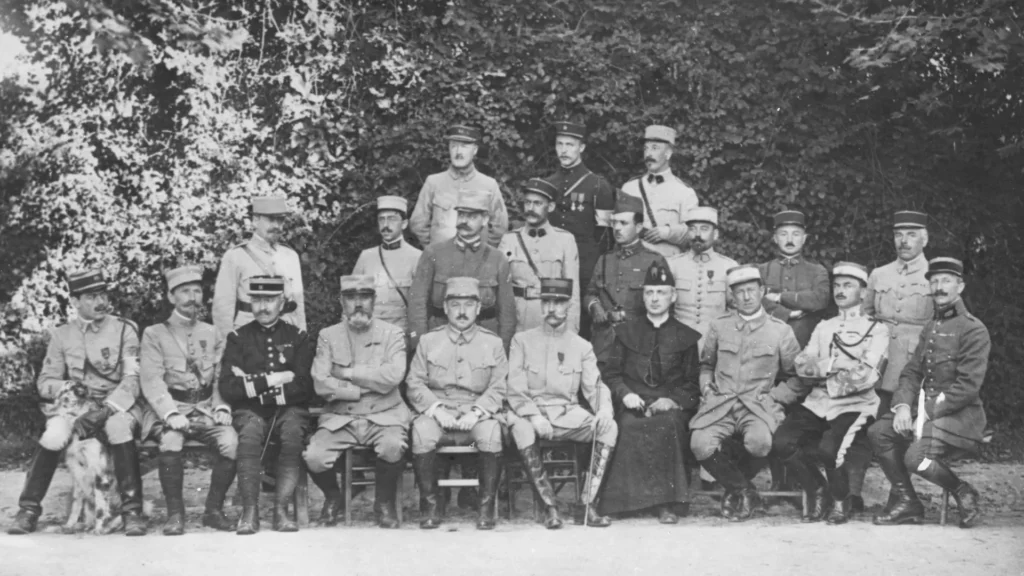
General Józef Haller’s “Blue Army” is one of the most rewarding-yet frequently misunderstood-paths for people researching Polish ancestors who volunteered during the First World War. The paper trail is genuinely international (France, the USA, Canada, and later Poland), and the records are often scattered across military and civil systems with different rules, languages, and catalogues. This article explains what survives, where it tends to be kept, and what is realistically achievable today-especially when family stories are vague or names have changed in migration.
Origins of the Blue Army in France and North America
The Blue Army (Armia Polska we Francji), associated with General Haller and French-issued horizon-blue uniforms, was formed in France during the later stages of the First World War. It drew on several streams of manpower: Polish volunteers and émigrés in France, prisoners of war of Polish origin from the Central Powers, and-critically for many family historians-volunteers recruited in North America (primarily the USA and Canada).
For genealogy, that origin story matters because it explains why documentation is rarely “in one place”. A volunteer might appear in:
- North American recruitment and transport paperwork (often tied to community organisations and consular channels),
- French military administration (as the army was formed, trained, and equipped in France),
- Polish military structures after the army was transferred to Poland,
- and sometimes later veteran, pension, disability, or memorial records-some of which were disrupted or re-filed after the Second World War.
Two practical realities shape research from the start:
- The same person can be recorded under different spellings (Polish, French, English; with or without diacritics; “Americanised” surnames).
- “Blue Army service” may be remembered in families as simply “served in the Polish Army”, even when the service actually continued into the Polish-Soviet War or later interwar units.
Searching for volunteers from the USA and Canada
If your ancestor volunteered from North America, you usually need to reconstruct identity first (exact name at the time, approximate year of birth, place of origin, and immigration details) before you can sensibly target European military records.
Useful starting angles-without pretending there is one universal set of “Blue Army lists”-include:
- Passenger lists and border crossings around the relevant period, which can show travel to Europe for military purposes or unusual group movements.
- Naturalisation papers and draft registrations (where applicable), which may contain birthplace, next of kin, and sometimes references to military obligations.
- Polish community press and organisational material in North America: announcements, farewell lists, fundraising committees, and local commemorations can provide a lead when official files are hard to match by name alone.
- Grave markers, obituaries, and veteran associations: some veterans’ organisations kept membership lists; local cemeteries sometimes note service in Polish formations.
What commonly blocks progress:
- Name volatility: “Kowalski” becoming “Kovalsky”, “Wójcik” becoming “Voychik”, or names simplified on English-language paperwork.
- Confusion between units: Blue Army service, Polish Army service in the interwar period, and later Second World War service can blur together in family accounts-especially if the person remained active or re-enlisted.
- Lack of a precise birthplace: Polish record access (civil registration and church books) depends heavily on place, and military identification in Europe is far easier when you know a parish/town and district.
Professional help can be decisive here because targeted research often requires combining North American sources with Polish locality knowledge-especially when the “place of birth” is recorded as simply “Poland” (or as a historical partition-era term).
Military records from the Polish-Soviet War (1920)
Many Blue Army soldiers went on to serve in Poland after the transfer of forces, and a significant proportion were involved-directly or indirectly-in the Polish-Soviet War (1919-1921), with 1920 being a key year in family narratives.
From a documentation perspective, you should expect a mixture of:
- Operational military records (unit-level, often not personally detailed for every soldier),
- Personnel-related material (where it survived and where the individual can be reliably identified),
- Casualty and hospital traces (sometimes the only personal mention beyond a roster),
- Decorations and awards references (useful, but frequently requiring corroboration).
A hard truth: not every soldier has a surviving individual “service file” in the way some countries maintain for twentieth-century veterans. Where individual documentation exists, access and location depend on the archival series and what happened to those records during later upheavals.
Second World War relevance is practical, not just historical: wartime destruction, evacuations, post-war reorganisation, and later security service involvement can affect what remains and where it ended up. Even when records survived, they may be fragmented across different repositories or catalogued in ways that are not obvious to non-specialists.
Identifying personnel in French Military Archives (SHD)
For Blue Army research, French archives matter because France hosted the formation, training, and administration of the force. The key institution family historians encounter is the Service historique de la Défense (SHD), France’s defence historical service, which holds substantial military archival collections.
In practice, success at SHD often hinges on identification strategy:
- Be ready to search across French spellings and transliterations of Polish names.
- Use date-of-birth and place-of-birth anchors where possible, rather than trusting surname-only matches.
- Expect French administrative terminology and filing conventions; even when a record concerns a Polish formation, it may be organised within broader French series.
Because SHD is a professional archival environment, requests need to be framed with the right level of specificity and realistic expectations. Some material may be consultable on-site only, and some series may require careful navigation even when catalogues exist.
Transition from the Blue Army to the regular Army
A common misconception is that the Blue Army is a “closed chapter” ending neatly with the First World War. In reality, for many individuals it became a bridge into:
- the regular Polish Army structures of the newly independent state,
- later interwar service, and in some cases,
- wartime trajectories during the Second World War (including displacement, later emigration, or post-war persecution depending on personal circumstances).
For genealogists, the transition period is where “identity drift” happens in the paper trail:
- A soldier may appear under one version of his name in France and another in Poland.
- Unit designations and administrative assignments may change.
- Later civil records (marriage, death, children’s births) may reference “soldier”, “veteran”, or a unit in a vague way that needs interpreting.
This is also the stage where Polish administrative realities begin to matter more. Post-transfer documentation may intersect with Polish institutions such as:
- military record-keeping bodies (depending on the period),
- state archival holdings that absorbed military material,
- and, for later life events, civil registration offices (USC) and state archives, each with their own access frameworks and retention rules.
If your goal is a documented narrative rather than a family legend, you typically need to correlate at least two independent record types (e.g., a French trace plus a Polish civil or military trace) before treating an identification as proven.
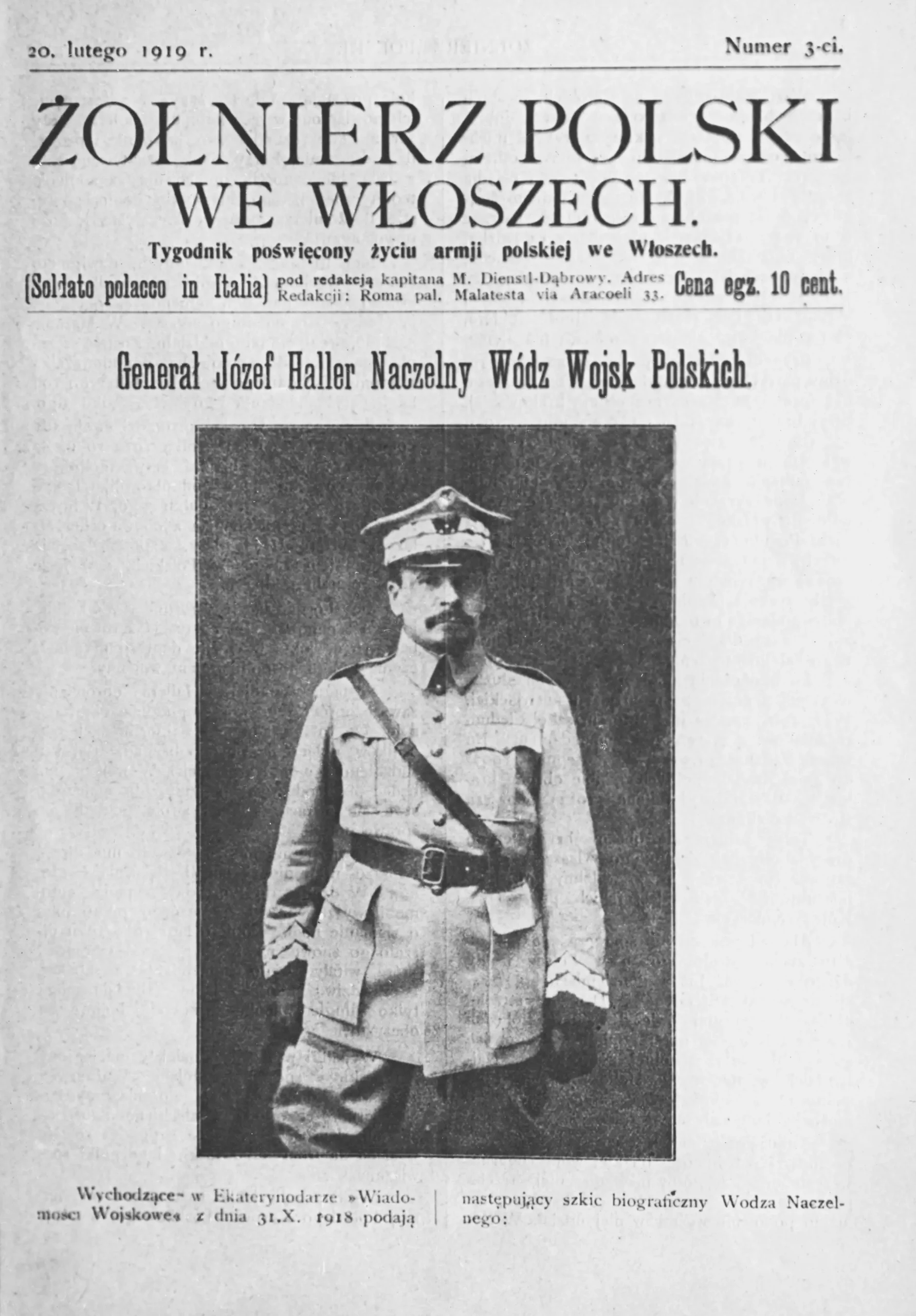
Locating Blue Army service files globally
There is no single “global Blue Army file index” that works for every volunteer. Realistic research usually means building a case across multiple jurisdictions and then following the strongest leads into the most promising repositories.
Typical locations and angles include:
- France (SHD and related holdings) for formation/training-era material.
- Poland for post-transfer service traces and later civil documentation that confirms identity and veteran status (access depends on record type, year, and privacy restrictions).
- North America for recruitment context and identity proof (immigration, naturalisation, local community records, newspapers).
- Family-held artefacts (photographs with insignia, paybooks, discharge papers, letters): these are not “nice extras”-they can be the difference between a correct match and a false lead when names are common.
What a professional Poland-based genealogist can do faster and more reliably:
- Interpret Polish place names and historical jurisdictions (especially where borders and administrative units changed).
- Work with Polish-language finding aids, archival catalogues, and correspondence norms.
- Cross-check candidates against Polish civil and church records to confirm identity (rather than relying on a single military mention).
- Anticipate access constraints and choose the most efficient route (for example, knowing when a record is likely still in a civil registry office versus already transferred to a state archive).
If you want help identifying the correct volunteer and obtaining the right documentation from Poland and abroad, you can commission this research and record retrieval through our professional service. We will assess what can realistically be found for your specific ancestor, advise on the most promising repositories, and handle the multi-language, multi-system process end to end.