Searching for Service Records of the Polish Navy in Great Britain
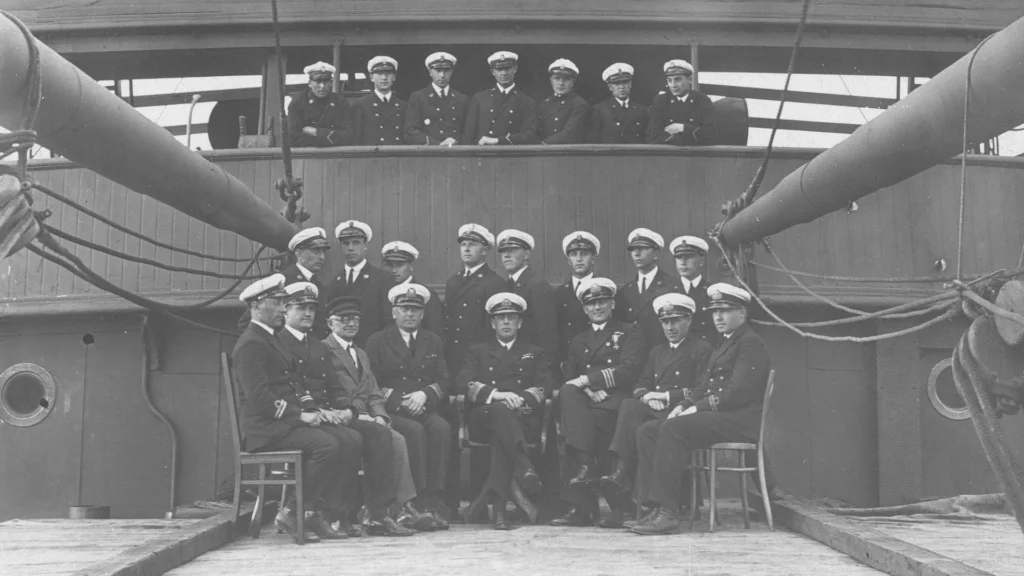
Many Polish sailors served at sea while Poland’s naval forces operated from Britain during the Second World War. For family historians, this often creates a paper trail split between Polish and UK institutions, with different access rules, catalogues, and levels of survival. Below is a realistic overview of what can (and cannot) be found, where to look, and why some enquiries succeed quickly while others require deeper archival work.
The Polish Navy under British Operational Control
After September 1939, surviving units of the Polish Navy (Polska Marynarka Wojenna) made their way to Britain and continued the fight alongside the Royal Navy. In practice, many Polish ships operated under British operational control (often within Royal Navy tasking and convoy systems), while remaining Polish-manned and retaining Polish identity (names prefixed ORP, Okręt Rzeczypospolitej Polskiej).
For research purposes, this matters because documentation is commonly duplicated-or fragmented-across systems:
- UK operational records: movement reports, convoy documentation, war diaries, action reports and Admiralty paperwork. These may list ships, dates, theatres, and occasionally named personnel (typically officers, casualties, awards, or incident-related entries).
- Polish military administration in exile: personnel administration, promotions, discipline, decorations, and post-war verification.
- Post-war and veteran administration: later attestations and summaries (often created for pensions, recognition of service, or resettlement), sometimes more detailed than wartime paperwork.
A common misconception is that there is one complete “service record” held in a single place. For Polish naval personnel in Britain, the most reliable results usually come from combining: (1) a confirmed ship/unit timeline, (2) UK operational sources, and (3) the best surviving personnel documentation (which may not be in the same country).
Identifying key ships and destroyers (ORP Błyskawica, Piorun)
If you only know “he served in the Polish Navy in Britain”, the quickest way to make the search realistic is to identify at least one ship and an approximate date range. The destroyers ORP Błyskawica and ORP Piorun are frequently mentioned in family stories, but it is important to verify the association carefully-high-profile ships are sometimes “remembered” when the relative actually served on another vessel, in a shore establishment, or in training.
Practical ways this identification typically happens:
- Family papers and photos: cap tallies, uniform badges, ship crests, postcards from ports, wartime letters with censor marks, or even a single mention of a convoy code/date.
- Polish name variants: spellings in UK paperwork can differ (diacritics dropped; “Piórun”/“Piorun”; surname anglicisation; inconsistent first-name forms). This can affect catalogue searches and digitised name indexes.
- Contextual ship research: once a ship is confirmed, its operational history helps target specific UK record series (for example, a known convoy route, a battle, or a refit period that generated paperwork and lists).
Where this leads in practice: rather than searching for an individual directly, you often work from the ship’s documented activities to locate lists and references where individuals appear (especially for awards, injuries, disciplinary matters, transfers, and specialist courses).
Personnel files for sailors in UK archives
Many readers expect a Royal Navy-style individual service file to be easily obtainable in the UK for Polish sailors. In reality, access and survival depend on status (officer vs rating), which authority created the record, and whether the file was later consolidated elsewhere.
What you can realistically expect to find in UK-held material includes:
- Operational and administrative references rather than full biographies: postings, embarkations/disembarkations, hospital admissions, courts martial summaries, casualty notifications, and award recommendations.
- Name lists that are event-driven: crew lists related to specific incidents, ports, repatriation movements, training courses, or demobilisation/resettlement processes.
- Files created by British authorities when Polish personnel intersected with UK systems (training, medical treatment, security vetting in certain contexts, or later immigration/resettlement administration).
Obstacles that commonly block DIY searches:
- Catalogues rarely index all personal names: many naval and Admiralty files are described by ship, operation, or date-not by individual.
- Privacy and closure periods: some record groups containing personal data are restricted for a set period, or require proof of death/relationship.
- Misleading “gaps”: the absence of an indexed service file does not mean the person left no trace; it often means their mentions are dispersed across operational or administrative papers.
If you are commissioning professional help, the key information to provide is: full name (with variants), date/place of birth, any known ship(s), rank/rate, approximate service dates, and post-war residence (Britain vs elsewhere). That combination usually determines which UK sources are plausible and which are a dead end.
Understanding naval training and “Conway” records
Families sometimes report that a relative “trained on Conway”. This is typically a reference to the training ship HMS Conway (a nautical training establishment), which has its own history and alumni culture. However, it is vital not to assume that every mention of “Conway” equates to a formal naval enlistment record-some people attended as cadets or trainees rather than serving as enlisted sailors, and documentation may sit outside standard naval filing.
In practice, “Conway”-related research tends to involve:
- Admission/attendance style records rather than operational logs.
- Alumni and institutional archives that may have nominal rolls, photographs, yearbooks, or correspondence.
- Cross-checking with later wartime service: cadet training does not always translate neatly into a traceable wartime naval posting, especially if the individual moved between merchant service, auxiliary roles, or different armed forces.
A realistic strategy is to treat training evidence as a lead that narrows identity (dates, home address at the time, guardians, prior schooling), then use those details to distinguish your ancestor from others with similar names in wartime records.
Medals and commendations specific to the Navy
Decorations and commendations can be one of the most informative surviving paper trails, because award processes generate supporting documentation: recommendations, citations, approvals, and sometimes biographical summaries.
For Polish naval personnel connected to Britain in WWII, you may encounter:
- Polish awards granted by Polish authorities in exile (often documented in Polish-language files).
- British awards or mentions where Polish personnel were recognised within Allied frameworks (not universal, but it does occur).
- Campaign medals and entitlement evidence that can help establish theatres and service periods, even when a full personnel file is missing.
What to watch for:
- Look-alike names: awards lists may use initials, omit diacritics, or contain transcription errors.
- Unit/ship identification: citations may name a ship or operation-crucial for tying a person to a timeline.
- Later verification: some awards were confirmed or re-documented after the war, producing additional paperwork separate from the wartime recommendation.
If medals survive in the family, photograph the naming on the rim (where applicable), the ribbons, any accompanying certificates, and the box/issued paperwork. Those small details can make the difference between a confident identification and guesswork.
How we investigate Polish naval service
If your goal is an official confirmation of service, rather than reconstructing service indirectly from ship records, you should be prepared for a process shaped by (1) where the relevant personnel documentation is actually held, and (2) access rules for personal data.
In practical terms, an effective request usually depends on:
- Proving identity and death (where required): many institutions will ask for a death certificate or clear evidence the person is deceased, plus proof of relationship if you are not the service member.
- Supplying enough identifiers: full name (with variants), date/place of birth, parents’ names if known, and any service details. Without these, institutions may be unable (or unwilling) to search thoroughly.
- Understanding that “service summary” may be limited: you may receive a brief statement of service dates and units rather than a full file copy, especially where privacy or file condition is an issue.
This is also where expectations need to be managed. Some families are hoping for a single document listing every ship, port, and action. Often, what is realistically obtainable is a combination of: a formal summary (if available) plus targeted archival extracts that evidence postings, operations, and awards.
If you want this handled efficiently-especially where Polish and UK sources must be combined, names are inconsistent, or catalogues do not index individuals-you can commission my professional genealogical research service to identify the correct institutions, submit properly evidenced requests, and build a defensible paper trail from primary records.