Maria Skłodowska-Curie: A Detailed Look at Her Polish Origins and Early Life
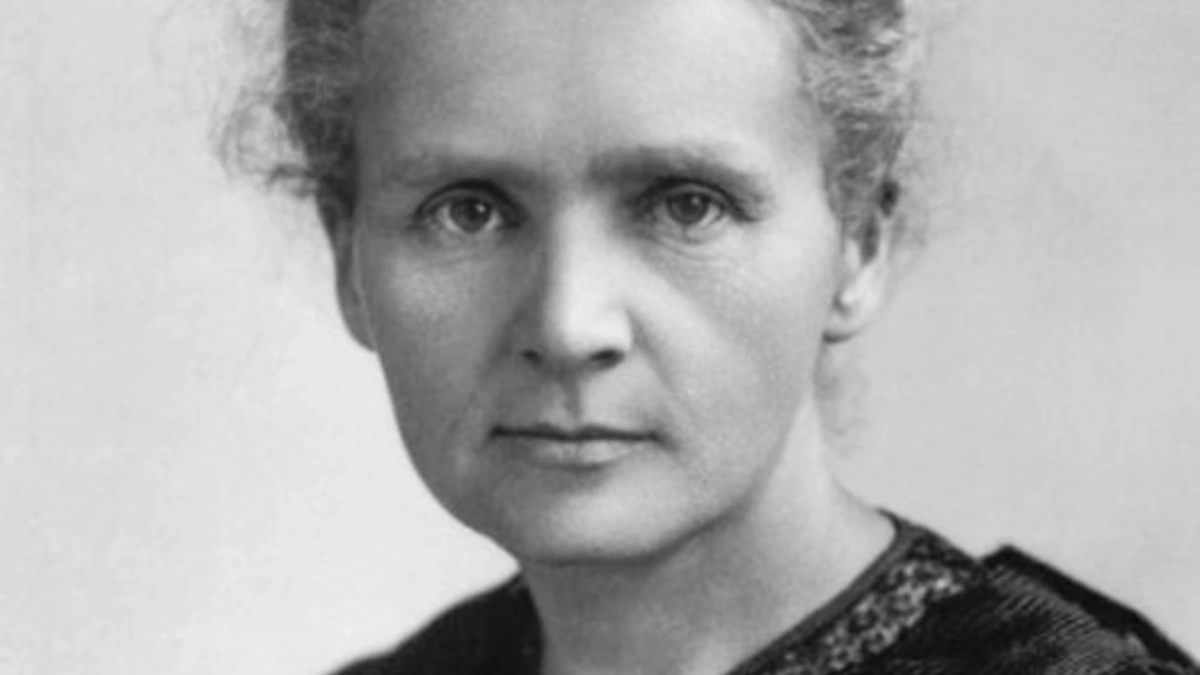
Maria Skłodowska-Curie is one of Poland’s best-known historical figures, yet tracing her family in records is more than a “famous-person biography” exercise: it is a practical case study in how Polish civil registration, church registers, schools, press, and later Franco-Polish documentation intersect. In this article I outline what is reliably known about her Polish roots and early life, and-just as importantly-what kinds of documents underpin such conclusions (and where they are typically found).
Skłodowski family origins (Mazovia roots and Warsaw connections)
The Skłodowski surname is strongly associated with the historical region of Mazovia (Mazowsze), and in Maria’s case the documentary trail is closely linked to Warsaw and its surrounding ecclesiastical and civil jurisdictions in the 19th century. For genealogists, two realities matter straight away:
- “Warsaw” in records is rarely just one place. Depending on the period and denomination, the relevant entries may sit in a specific Roman Catholic parish, a municipal/civil register series, or later state-held duplicates. Even within one city, parishes and districts changed, and the competent office can differ by address and year.
- Border and administrative context affects where copies survive. In Maria’s lifetime, Warsaw lay within the Russian Partition. That matters because record-keeping formats, languages used in entries (Polish/Russian), and the survival of duplicates can differ from Austrian/Prussian areas. For researchers, it is often the difference between a quick document retrieval and a long hunt across parallel series.
From a practical research perspective, “Mazovia roots” is best treated as a hypothesis to document (not a slogan): you prove it through a chain of certificates-birth/baptism, marriage, and death-moving generation by generation, rather than jumping directly to a presumed “home village”.
Maria’s parents: Władysław Skłodowski and Bronisława Boguska-home, education, values
If you are reconstructing Maria’s early life genealogically (rather than narratively), you look for record groups that capture identity, residence, and social position:
- Civil and church vital records (birth/baptism, marriage, death/burial) are the backbone. They establish parentage, ages, occupations, addresses, and witnesses-often relatives.
- Education-related traces can be unusually informative for Warsaw families of this milieu: school employment, teaching appointments, and institutional references sometimes appear in press notices, memorial publications, or archival fonds tied to schools and educational administration.
- Address and household context may be supported by city directories, period press, or cemetery documentation where available.
In 19th‑century Warsaw records, you should also be prepared for the “administrative layer” that outsiders underestimate: the same person can appear under slightly different forms of forename (e.g., Polish vs. Russified spellings in certain periods), and surnames may be standardised inconsistently across clerks and decades. A careful researcher treats these not as contradictions, but as normal features of the sources.
The Skłodowski siblings: Zofia, Józef, Bronisława, Helena-family paths and migrations
Siblings are not just “extra names” on a family tree-they are often the key to solving problems when a main line is hard to document. For the Skłodowski family, the siblings’ trajectories illustrate three common Polish genealogy dynamics:
- Urban mobility: Even when a family is “Warsaw-based”, addresses and parishes can shift. That can move you between different parish registers and different civil register series.
- Cross-border movement: Later migrations (whether within former partitions or abroad) introduce new jurisdictions, record languages, and separate archival cultures.
- Collateral documentation: A sibling’s marriage or death record may name parents more clearly than another sibling’s record, or provide witnesses who are direct relatives-allowing you to confirm connections where earlier documents are ambiguous.
Practically, a professional approach maps each sibling to a timeline + place list, then targets the specific record sets that match those dates and places. This is faster and more reliable than searching “by surname” in isolation-especially in a capital city.
Marriage to Pierre Curie and the Curie branch-surname, records, citizenship
Once Maria marries Pierre Curie, the research becomes decisively transnational. In real-world documentation terms, that usually means:
- French civil registration becomes primary for the marriage and later life events in France, while Polish records remain crucial for proving Maria’s earlier identity and parentage.
- Surname conventions can confuse modern researchers. In Polish contexts, “Skłodowska” is the feminine form of the family surname; after marriage, she is widely known as “Curie” (and internationally as “Marie Curie”), while some documents and publications retain “Skłodowska” to emphasise her origin. For genealogical proof, you rely on the actual wording in contemporary certificates, not later biographies or commemorative texts.
- Citizenship and legal identity can generate additional documentation (depending on the exact event and period): passports, residence permissions, or institutional files. These are not always easy to access, but when they survive they can be extremely evidential-often tying together names, birth details, and addresses across countries.
A common bottleneck here is not “lack of records”, but access and searchability: different countries have different privacy rules, archival catalogues, and digitisation coverage.
Maria’s children: Irène and Ève Curie-continuation of the line, careers, descendants
For descendants, the genealogical challenge shifts from “finding the right parish register” to managing privacy restrictions and modern administrative practice.
- In Poland (and in many European contexts), access to more recent civil records is often limited to direct descendants or persons with a legal interest, and may require proof of relationship. Even when a record exists, it may not be publicly available.
- For lines continuing in France (and potentially elsewhere), the practical issues include civil register access rules, the availability of indexes, and whether later events are within open-access time frames.
For family historians, the correct mindset is: modern descendants’ documentation tends to be administratively controlled, while older generations’ documentation tends to be archivally controlled. A professional researcher plans accordingly-using older records to build proof chains, and approaching modern records with realistic expectations about what can be obtained and by whom.
Genealogical research sources: civil & church records, archives (Warsaw/Paris), press, cemeteries, biographies
When researching a prominent Polish figure such as Maria Skłodowska-Curie, it is tempting to rely on biographies alone. Biographies are useful, but they are secondary sources. Proper genealogical work cross-checks them against documentation. The most productive source categories are:
- Civil registration and parish registers (Warsaw and Mazovia context): These provide the core life events and family links. In Poland, older registers may be held by state archives, while more recent ones may still be in local civil register offices (Urząd Stanu Cywilnego, USC) or relevant church repositories, depending on the locality and period.
- State and municipal archives: Beyond vital records, archives may hold school-related files, institutional correspondence, or administrative lists. The challenge is usually not existence but identifying the right archival fonds and reading catalogue descriptions that may be only in Polish.
- Press and periodicals: Notices (appointments, awards, obituaries, commemorations) can support timelines and relationships. Press research is also a strong way to confirm addresses and social networks-witnesses, colleagues, and extended relatives.
- Cemeteries and memorial inscriptions: Burial registers, grave records, and cemetery administration files can sometimes clarify dates and family groupings, but should be treated cautiously unless corroborated.
- Biographies and scholarly works: Valuable for context and leads, but best used as a map pointing you towards original documents.
Where wartime history fits (and where it does not)
The Second World War is central to Polish archival reality-through destruction, displacement, post-war border changes, and the movement of collections. However, in Maria Skłodowska-Curie’s case, her early-life civil/parish documentation is primarily a 19th‑century Warsaw question, not a wartime one. WWII becomes relevant mostly in terms of:
- whether specific Warsaw record series survived intact,
- how collections were reorganised after 1945,
- and why some files may be missing, duplicated elsewhere, or accessible only through particular institutions.
If you want results, prepare the right starting information
Before commissioning research (or even before making enquiries yourself), it helps to gather:
- the best-known dates and places (even approximate),
- variant spellings of names (Polish and non-Polish forms),
- religion/denomination if known,
- any family-held documents, photographs with inscriptions, or letters,
- and where the family lived (even a street name can be decisive in a city).
A Poland-based professional genealogist can usually move faster because they can: interpret Polish-language catalogues and archival descriptions, identify the correct jurisdiction quickly (especially in Warsaw’s complex landscape), and contact institutions in the expected form-while building a defensible evidence chain rather than a collage of online snippets.
If you would like help identifying the most promising record sets for the Skłodowski line-or obtaining specific documentation from Warsaw and relevant archives in Poland and abroad-you can commission professional research tailored to your exact goal and budget.