Stanisław August Poniatowski: Tracing the Poniatowski Line Through Genealogical Records
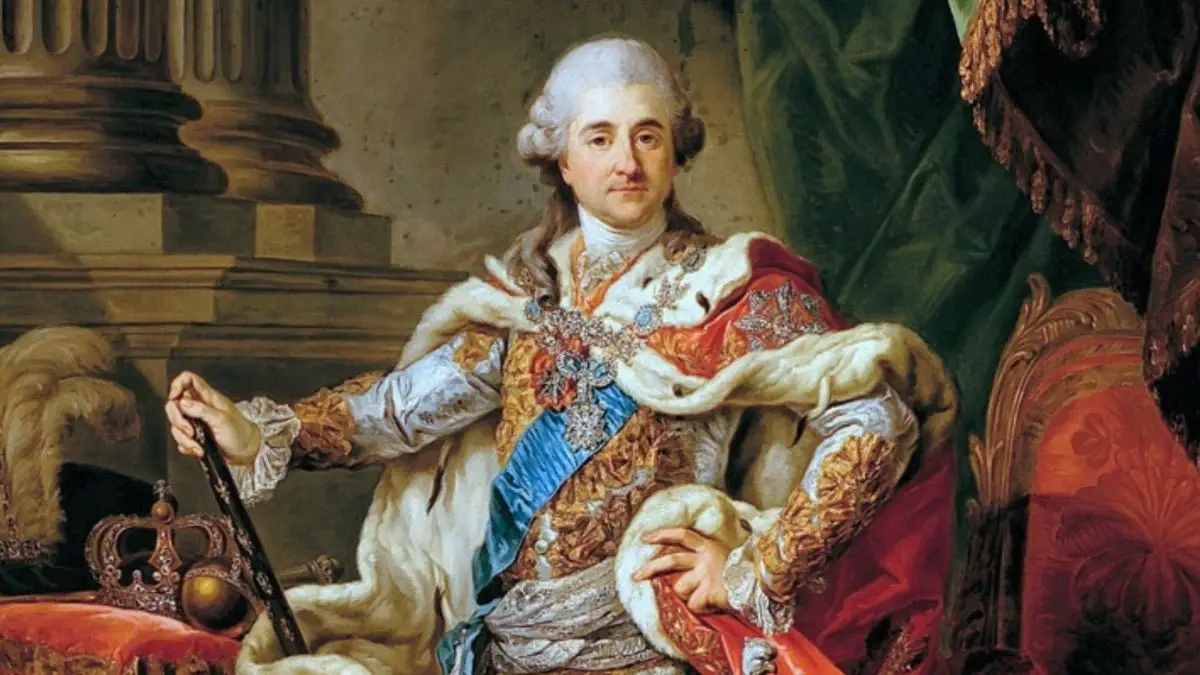
Tracing the lineage of Stanisław August Poniatowski (1732-1798), the last King of the Polish-Lithuanian Commonwealth, requires careful comparison of surviving records. The challenge is not a lack of “family stories”, but the gap between popular genealogical narratives and what can actually be proven from surviving records-especially for noble families whose documentation is dispersed across many institutions, countries, and languages.
Origins and Early Life of Stanisław August Poniatowski
Stanisław August Poniatowski was born on 17 January 1732 and died on 12 February 1798. He reigned as King of Poland and Grand Duke of Lithuania from 1764 to 1795, and is widely treated as the last monarch of the Polish-Lithuanian Commonwealth. These basic biographical anchors matter for research because they define which record systems you will encounter: late Commonwealth chancellery and court records, magnate and family archives, and (for later generations) the partition-era administrations.
For genealogists, an immediate practical point is that “royal” does not mean “simple”. Records relating to prominent figures can be extensive, yet scattered: some sit in state archives, some in aristocratic family fonds, and some survive as copies, abstracts, or later compilations-each with its own reliability issues.
The Poniatowski Family: Branches, Coats of Arms
When people say “the Poniatowski line”, they often mean very different things:
- the close family of the King (parents, siblings, nephews/nieces);
- later princely branches recognised in the late 18th century and beyond;
- or broader gentry lines using the same surname, not always genealogically connected in the way modern families expect.
The surname itself is associated with a Polish noble (szlachta) family whose rapid rise-from gentry to senatorial rank and ultimately to the throne in an elective monarchy-is part of why the family attracts genealogical interest.
In practice, coats of arms and heraldic references are useful as clues (helpful for sorting similarly named people and locating estates), but they are not proof of descent on their own. Many researchers get stuck by assuming that a shared surname plus a heraldic note equals kinship.
Marriages, Children, and Succession Questions
This is the point where noble genealogy becomes sensitive to source criticism.
Stanisław August is well documented as a public figure, but family claims about partners and children are not always supported consistently across reference works. Even widely circulated secondary summaries can contradict each other, especially concerning alleged children and the interpretation of relationships. You should treat any claim of descent “from the King” as a hypothesis until it is backed by contemporaneous documentation (court files, correspondence, property settlements, guardianship cases, church registers, or formally registered civil status acts where they exist).
From a practical records perspective, succession and kinship questions often leave a paper trail in:
- inheritance and property disputes,
- guardianship and legitimacy-related proceedings,
- name-change and ennoblement/confirmation processes (particularly later, under partition administrations).
State Archives guidance for genealogists explicitly points out that 19th-20th century court records may include matters such as inheritance, name changes, and presumptions of death-categories that can be crucial when noble lines are contested or when the direct vital record trail breaks.
Core Sources for Tracing the Line
The strongest research results typically come from combining several record groups, rather than expecting one definitive “family tree document”.
1) Central and regional State Archives (Archiwa Państwowe)
Poland has a national network of State Archives (central and regional). For genealogists, the key point is that archives holdings reflect Poland’s complex history-wars, partitions, border changes, and administrative reshuffles-which is why records for one family may be dispersed across multiple cities and even outside modern Poland.
2) Civil registration (USC) vs State Archives: the 100/80-year reality
For post-19th-century descendants and collateral lines, civil status records are often central. In Poland, access is shaped by privacy thresholds widely applied in practice: birth records are restricted for 100 years, while marriage and death records are typically restricted for 80 years. After these periods, registers may be transferred to the State Archives (though the timing can depend on the register volume and local practice).
That distinction matters because it changes where you apply:
- newer acts: usually Urząd Stanu Cywilnego (USC);
- older acts: often State Archive, sometimes already digitised or at least catalogued.
3) Major digital finding aids: Szukaj w Archiwach
A genuinely practical “first pass” for many lines is the Polish State Archives’ online portal Szukaj w Archiwach, which provides descriptions and (for selected materials) scans from Polish archives and other institutions. It is not complete, but it can quickly reveal which archive holds what, and whether scans exist.
4) AGAD in Warsaw and private/family fonds
For noble and magnate research-especially for families active in state affairs-AGAD (Archiwum Główne Akt Dawnych, the Central Archives of Historical Records in Warsaw) is a frequent destination. AGAD holds extensive materials from the early modern state and also private and family archives, including fonds relating to members of the Poniatowski family (for example materials connected with Prince Józef Poniatowski and other related family groupings).
5) Wartime losses and “why the obvious record is missing”
You cannot work responsibly with Polish genealogy without acknowledging the impact of the Second World War, including large-scale destruction and displacement of archival collections-particularly acute for Warsaw-based repositories and record series. The practical consequence is that a missing register does not automatically mean “the event was not recorded”; it may mean the original was destroyed, survives only as a duplicate, or the relevant information must be reconstructed indirectly from other sources (court files, notarial deeds, estate papers, or copies in different repositories).
Proving Kinship: Source Criticism, Conflicting Accounts, and Common Pitfalls in Noble Genealogy
Noble genealogy attracts confident assertions-often because a story has been repeated for generations. For professional-standard proof, you normally need to address five recurring problems:
- Same-name confusion
In noble circles, given names repeat across generations. Without dates, offices, estates, and spouses, it is easy to attach the wrong person to the wrong parents. - Heraldry treated as evidence
Coats of arms and “herbarz” entries can be excellent signposts, but they are not inherently proof of biological descent. They must be anchored to documents created near the time. - Uncritical copying of printed pedigrees
Printed genealogies and online trees can preserve real information-but also propagate a single error widely. When sources disagree, you should privilege contemporaneous acts and files over later summaries. - Jurisdiction and border changes
The same family’s records may appear under different administrative systems depending on period and place. Even within today’s Poland, the “obvious” archive is not always the correct one, and outside Poland the trail may continue in repositories aligned with former partition borders. - Document access constraints
For 20th-century branches, privacy thresholds and proof-of-relationship requirements are often the bottleneck. Even when records are old enough, transfer to archives may lag; where a register sits today can be as important as whether it exists at all.
Research Roadmap: Where to Find Poniatowski Records
A realistic roadmap usually starts with defining which “Poniatowski line” you mean (royal close family, a princely branch, or a local gentry line) and then building outward with sources that match that social and administrative context.
- Start with what can be proven in your own line
Gather your family’s documents first (certificates, passports, military papers, immigration files). This helps avoid chasing the “royal” hypothesis prematurely. - Identify the correct Polish jurisdiction(s) and repositories
For civil status acts: determine whether the record should still be in USC or already in the State Archives based on the 100/80-year thresholds and the register’s coverage.
For noble and estate documentation: expect to use AGAD and potentially multiple regional archives, depending on estates and offices held. - Use online catalogues strategically (but don’t assume completeness)
Search Szukaj w Archiwach for fonds names, estate names, and known relatives. Treat it as a discovery tool, then confirm holdings through archive inventories and reading-room rules. - Plan for indirect evidence
If key registers are missing (including due to wartime destruction), shift to court files, property and inheritance material, and private archives-often the only way to resolve kinship disputes in noble lines. - When to involve a professional
If your goal is to prove a specific kinship claim (rather than build a general tree), professional research typically saves time because it requires:
- Polish-language correspondence and in-person archive work,
- familiarity with archival structure (fonds, signatures, inventories),
- and disciplined evaluation of conflicting accounts.
If you would like, you can commission our professional genealogical service to identify the most promising record groups for your specific Poniatowski connection, obtain documentation from the relevant Polish institutions, and produce a clear evidence-based conclusion.