Fat Thursday in Poland: Pączki and Tłusty Czwartek
Fat Thursday in Poland is the last Thursday before Ash Wednesday. It is called Tłusty Czwartek, and the thing most people look for that day is a pączek, a filled Polish doughnut. Bakeries pile them into trays, people bring boxes to share and some households make crisp strips of fried dough called faworki.
The date moves with Easter. It comes five days before Britain’s Pancake Day, which falls on Shrove Tuesday. Both customs belong to the days before Lent, so a British family can put a doughnut and a pancake on the calendar without choosing between them.
When is Fat Thursday in Poland?
Count back to the Thursday before Ash Wednesday. Shrove Tuesday is the day immediately before Ash Wednesday, so if you already have Pancake Day in your diary, Fat Thursday is the preceding Thursday. The date usually lands in February and can fall as early as late January or as late as early March. Use the rule each year instead of copying the date from a bakery sign or an old event listing.

In 2027, Fat Thursday falls on 4 February. Shrove Tuesday follows on 9 February and Ash Wednesday on 10 February. If you keep a family calendar, putting both dates on it makes the relationship easy to remember. It can also help when reading a photograph caption that names the celebration but gives no date. The year still has to come from another clue, such as a dated print or a note in the same album.
The Thursday comes near the end of the carnival period. In Polish, you may also see ostatki used for festivities at the close of carnival. It can refer more broadly to the final days before Lent. A poster marked Tłusty Czwartek points to Thursday itself, while a notice for an ostatki dance may give a different day.
Polish communities abroad can keep the Polish Thursday date or hold a public event when more people can attend. A listing that says Pączki Day needs a date of its own. In some communities outside Poland the name can be used for a celebration closer to Shrove Tuesday. A box of Polish doughnuts may look the same on either day, even when the local calendar differs.
Why do people eat pączki before Lent?
In earlier households, the last days of carnival were an occasion for richer food before a period of fasting and abstinence. Polish historians describe meat and other substantial dishes as part of older feasts. The sweet doughnuts associated with the day now represent one part of a changing menu. There was room in earlier cookery for fried dough served quite differently from the soft jam-filled buns that fill a modern shop window.
As sweet baking became established, doughnuts and fried pastries found a lasting place in the celebrations. The ingredients mattered, but so did the timing. A dish that took more fat, eggs or work than an everyday meal made sense when people expected a feast before the leaner season. The same logic helps explain why similar days elsewhere produced different foods.
You may hear that you should eat at least one pączek for good luck. It is a saying people repeat for fun. These days someone might join the bakery queue on the way to work, bring a box to the office or share a doughnut with a neighbour. The form of the feast has changed, while the Thursday still gives people a reason to eat something together.
What makes a pączek a Polish doughnut?
Pączek is one doughnut and pączki is the plural. The typical version is a round, enriched yeast dough fried and filled. Rose preserve is a familiar choice. Plum preserve and other fillings also appear. The top can be dusted with icing sugar or glazed, sometimes with pieces of candied orange peel. You will see variations from one bakery to the next.

If you are trying one for the first time, ask about the filling. The exterior can look almost identical across a whole tray, even if the bakery makes several sorts. A pale band around the middle may appear when the dough floats during frying. Texture and freshness give you more to go on than the colour of the outside alone.
A Polish family recipe can use an ingredient name or kitchen measure that looks strange in English. Copy the original line before making a conversion. Two recipes with the same heading may call for different doughs, and a home cook may add a note about a filling that never appeared in the printed instructions. Those changes are a useful part of the recipe’s history.
Faworki, chrust and angel wings
Faworki are thin pieces of pastry cut, twisted through a slit, fried and often finished with icing sugar. You may see them called chrust in Polish or angel wings in English. On a plate they make an easy contrast with a pączek: the strip breaks with a snap, while the doughnut is soft and usually has a centre of filling.

An older family cook might use chrust where a local Polish shop labels the same sort of pastry faworki. Write down both if you are labelling a recipe or photograph for the family. The names can help relatives recognise what they remember even when they learned different words for it.
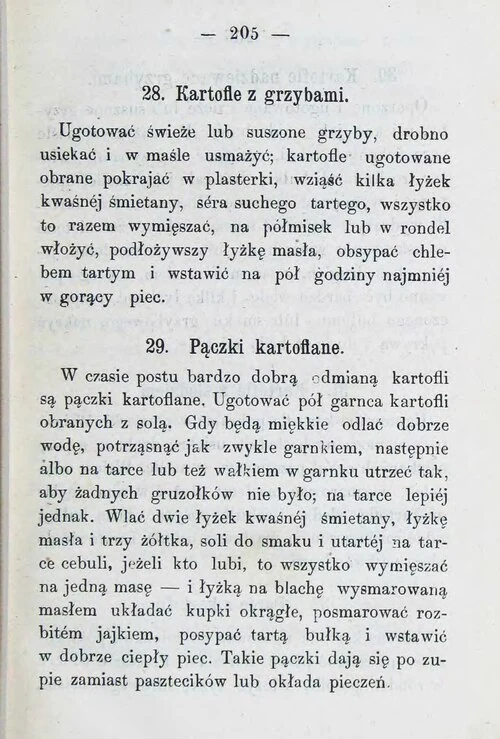
Polish cookbooks are useful for seeing how writers described fried pastries in their own time. Lucyna Ćwierczakiewiczowa, the nineteenth-century cookbook author, is one place to start. Her 1871 edition includes a savoury potato dish labelled Pączki kartoflane. The heading shows how widely the word could be used. The ingredients and method tell you which kind of dish the author meant. A stain, handwritten change or loose sheet tucked into a family copy can tell a separate story about how it was actually used.

Fat Thursday and Pancake Day in Britain
The Polish Thursday and British Tuesday belong to the same stretch of the calendar. Britain’s Pancake Day is associated with using ingredients such as eggs and milk before Lent. In Poland the recognisable shop display is made up of doughnuts and other fried pastries. You can explain the connection to someone who knows only Pancake Day by putting the two dates on the same calendar.
The comparison also makes room for family habits. A person raised in Britain may know a pączek first from a Polish food shop and only later learn why a relative buys a whole box on a particular day. Someone who grew up making them at home may remember the job of filling them, the smell of the kitchen or the way they were carried to another house. The guide to Polish food in Britain gives more context for how dishes travel with families.
What a family recipe can tell you
A recipe can record more than ingredients. Check whether the writer put their name on the cover, wrote a town beside a recipe, or used the back of a letter, shop receipt or calendar page. A note such as od cioci, or from auntie, is worth keeping in its original form. Ask which aunt the writer meant and who was there when the food was made.
For example, a notebook in a family in Britain might contain a faworki recipe on paper from a business in Poland. The heading tells you the dish. The printed address gives you a locality to investigate. Another family document may show who lived or worked nearby. Each detail does a different job and together they give you a better starting point for research.
Write down the name of the bakery as well as the name of the dish if a photograph includes a shopfront or a box. The name may be visible only at the edge of the frame. A photograph of a family recipe being used gives another kind of evidence, especially when you can identify the kitchen or the people in it.
If your papers give you a person, place and approximate date, our family history service can follow those clues into Polish parish, civil and other archival records. We explain the connections in English and provide copies where available. Keep the name of the person who passed down the recipe with the scan, even when someone else copied it out.