Opłatek: Why Polish Families Share a Christmas Wafer
Opłatek is the thin, usually white wafer that Polish families break and share before their Christmas Eve supper, known as Wigilia. Two people exchange good wishes, each breaks off a little piece of the other’s wafer and they eat it. Then they move on to the next person. A wafer can also be posted to a relative who cannot sit at the table that year.
You may see the word written as oplatek or the plural as opłatki. The wafer is commonly made from flour and water and pressed with a Christmas or religious design. The custom is easiest to understand if you watch what people do with it: everyone gets a moment to speak to someone directly before the meal starts.
What is the Polish Christmas wafer made of?
The familiar opłatek is a thin, unleavened sheet, often rectangular. On a whole wafer, the raised design can be easier to see when light comes across it from the side. You might recognise a Nativity scene, a star or a figure surrounded by a decorative border. A piece breaks off easily, which is part of why a single wafer can be shared among several people.
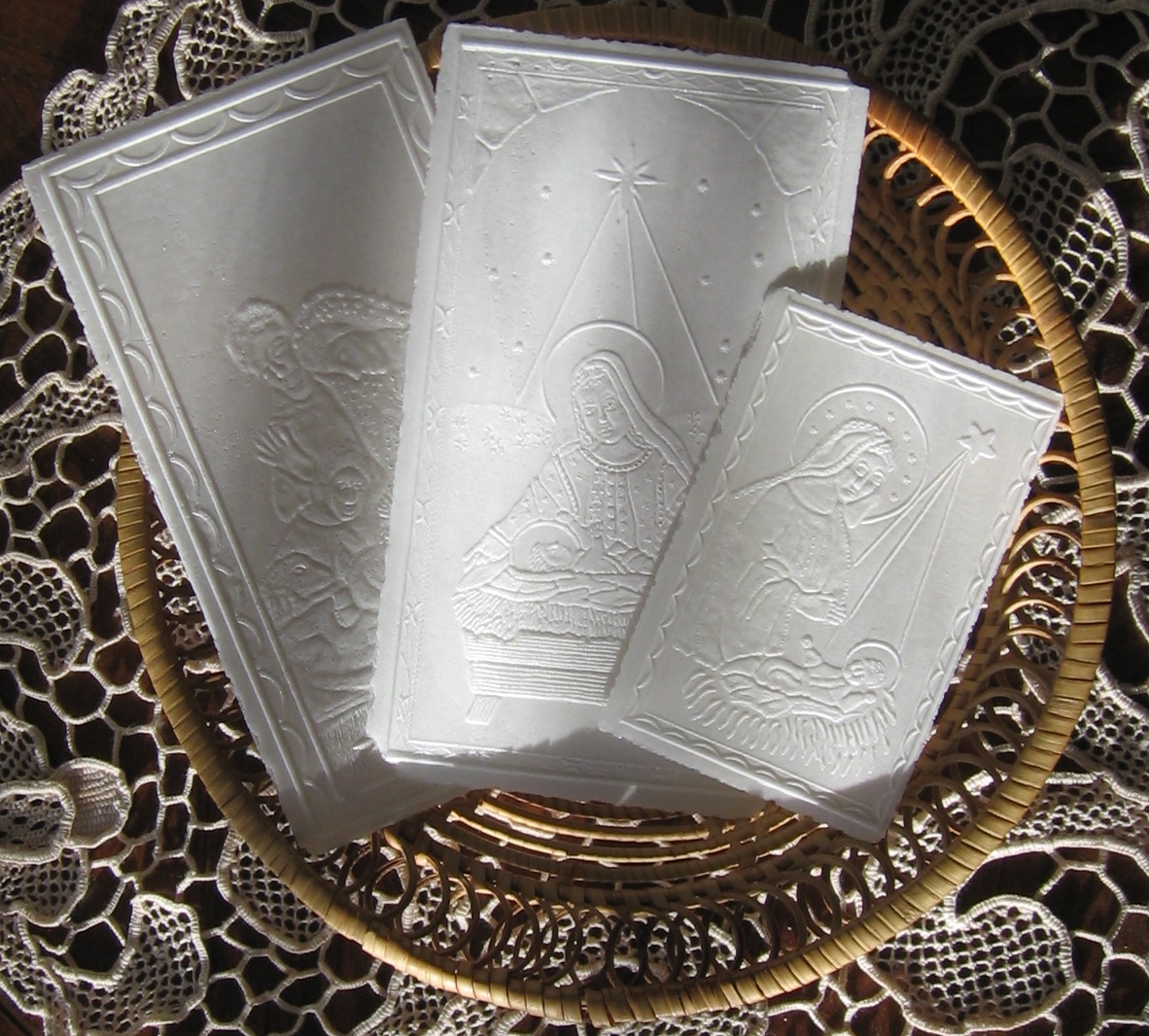
It resembles a communion wafer in colour and texture. At Wigilia, it belongs to a household Christmas custom. A relative may have brought it from a parish or received it in the post. If someone is keeping a wafer as a memento, its sleeve can be just as informative as the object inside. Look for a printed parish name, a town or a greeting.
Museum accounts describe other uses, including coloured wafers associated in some households with giving a piece to livestock. A historian interviewed about old Warsaw also describes a decorative star made from wafer. These examples show why an old family reference to opłatek can mean more than the sheet currently on a plate at supper. Ask what shape it was and where it was placed before trying to match it to a written account.
How to share opłatek at Wigilia
The usual moment is before anyone starts eating. Someone brings the wafers to the table and people turn to each other in pairs. Hold out your piece for the other person to break off a corner, and take a little of theirs when it is offered. Exchange your wishes as you do this. Follow the pace of your hosts if several pairs are already talking.

At a large gathering the ritual can take several minutes. A person may speak briefly to a neighbour and spend longer with a parent who has had a difficult year. That flexibility makes the words feel personal. An exchange can end with a hug if that is comfortable for both people, or simply with a smile and a thank you.
Some families begin with a prayer or a reading. In others, someone passes the plate as soon as the guests are gathered. If you are joining for the first time, there is room to ask the host how their household does it. A shared practice can take a slightly different shape each time relatives bring their own habits to the table.

What to say when you break opłatek
Wesołych Świąt means Merry Christmas and is enough for a first exchange. If you want to wish someone good health, you can say Życzę Ci zdrowia to a person you normally address informally. For a close relative, add a wish for something you have talked about together. English wishes are equally easy to understand at a bilingual table.
You may hear someone wish the next person spokoju, meaning peace or calm, or pomyślności, meaning good fortune. Those words can appear in cards as well as being spoken. The same greeting can sound formal on a printed card and affectionate when it is followed by a family joke in someone’s handwriting.
In a mixed Polish and English household, one relative may say the Polish greeting and another may answer in English. There is no need to memorise a speech. If you know one short phrase, you can say it first and add your own wish in the language in which you can say it most naturally.
Why send a wafer to someone who is away?
A wafer is light enough to slip into a Christmas card. It gives the person opening the envelope something from the same tradition even if they spend Christmas elsewhere. A letter may describe who was coming to supper, who had moved or who would be missed that year. The gesture can make sense to someone who has never lived in Poland but remembers it from a parent’s home.
Think of a card sent from Poland to a household in Britain. The sender may write only a first name in the card because everyone knows who it is. The return address can give the name of a street or town. A second envelope can show the same address under a fuller name. When the cards are kept together, details that look small on their own start to connect.

Keep the wafer with its wrapper and the card with its envelope if they survive together. If they were found loose in a box, photograph how you found them and keep their association open. A card can still help establish a family contact even when the story of its contents is uncertain. The broader guide to Polish Christmas in Britain covers the other customs that might be mentioned in the same letters.
What an old Christmas card can tell you
Read the signature, address and postmark separately. The signature tells you what the writer called themselves. The address shows where the letter was meant to go or where replies could be sent. The postmark can help date the correspondence, even if someone used an older card. Photograph both sides in good light before separating a brittle card from its sleeve.
Imagine a Christmas card signed Ciocia Zosia, or Auntie Zosia. That is how the writer addressed the recipient. It could be a blood relative, an aunt by marriage or a familiar title for a close family friend. A Polish locality in the return address makes it possible to compare that name with other papers. A marriage entry or residence record might then help establish the relationship.
A stamp or printed parish address can help place a household within a community. In Britain, Polish Catholic Mission registers may be relevant when you have an event, approximate date and parish. A place in Poland can point towards the civil or parish records used to document the family connection. Keep the clue and the eventual finding together in your notes.
Keeping the custom at your own table
A family can share one wafer before supper even if it keeps few other Wigilia customs. If someone has a different memory of the order of the meal, give them time to describe it. They may remember who brought the wafer every year, which relatives posted cards and who kept the wrappers. Those details can matter more to the family than settling on a single version of the ceremony.
If several generations are sharing the table, give children a chance to ask what the older relatives remember. A question about who stood next to whom can prompt a more detailed answer than a question about how the whole supper used to go. If you write the story down, include the year and place of the meal being described. That leaves space for a second account of Christmas in a different house.
An envelope from a parish can also tell you where a relative received mail at the time. Keep the address exactly as printed, even if a street has since changed its name. A note in another hand might be a forwarding address rather than the original sender’s home. Both places can be useful once you know which generation the correspondence belongs to.
When a card or envelope gives you a name and a place to investigate, our Polish family history research can trace the agreed family line in civil, parish and other archival sources. We explain the connections in English and provide copies of records found where available. You can share scans of the papers alongside the names and dates you already know.