1st Polish Armoured Division: A Service Records Guide
The records of a soldier in the 1st Polish Armoured Division can connect a family story about Scotland, Normandy or the Netherlands with a named person and their service. The most useful evidence combines an individual service record with the unit and dates shown in family papers. A history of the division explains the wider campaign; it cannot establish that your relative took part in every action.
The Polish Genealogist offers paid Polish military service records research for families in Britain. We investigate names, service numbers, postings and surviving documents, then explain the findings in an English-language report with references and copies where available. The aim is a supported account of one person, including gaps that the evidence cannot resolve.
Identify the formation before following the campaign
The 1st Polish Armoured Division is also encountered as 1 Dywizja Pancerna in Polish records and as the 1st Polish Armored Division in American spelling. Its commander, General Stanislaw Maczek, is often the only name remembered by descendants. That association is a useful starting clue, but a mention of Maczek does not by itself identify a soldier’s regiment, squadron or dates of service.
Record the exact wording on a document before translating it. A division is a larger formation than a regiment, and a soldier may have changed units. A regimental name on a dated paper is usually a more precise lead than a family description such as Polish tanks. Numbers also need their labels: a unit number and an individual service number answer different questions.
Keep this division separate from Anders’ Army and the 2nd Polish Corps associated with the Italian campaign. If a family collection contains both Scottish photographs and a Monte Cassino decoration, investigate the dates and ownership of each item. They may relate to different relatives or different stages of service. Our Monte Cassino Cross guide explains the distinction between an award number and a service number.
Build a dated trail from Scotland to continental Europe
The Virtual Museum of the 1st Polish Armoured Division places its formation and Scottish training in 1942-1944, followed by fighting in Normandy in 1944 and operations in Belgium and the Netherlands. Its collection also covers occupation service in Germany in 1945-1947. These stages provide a framework against which to test the dates in a personal record.
The National Army Museum discusses the division’s role in Operation Totalise and the Falaise fighting in August 1944. The campaign gives context to a confirmed posting; it should not be inserted into every veteran’s biography as personal experience. Someone who joined later, was in hospital or was attached elsewhere could have a different individual timeline.
A useful research chronology keeps three things together: the date, what the document actually says and the conclusion it supports. For example, a dated posting to a regiment can establish membership at that point. An undated photograph with a location written on its reverse may suggest another lead, but it cannot supply a posting date on its own.
Keep uncertainty visible. If two documents leave a six-month gap, describe the gap rather than filling it with the division’s movements. The account can still explain what the formation was doing during that period, provided it clearly distinguishes unit context from confirmed personal service. This makes the finished report useful for later research as new papers emerge.
What an individual Polish service record may contain
Current GOV.UK guidance lists Polish personnel who served under British command in the Second World War as a separate category whose records should be requested from the Ministry of Defence. Do not assume that a transfer rule for British Army files determines the location of a Polish veteran’s record. Our MOD Polish service records guide explains the distinction.
A surviving record may give a service number, rank, unit, birth details and joining or leaving dates. Career entries can help reconstruct postings, although the detail varies. GOV.UK warns that some cases produce little or no information and that disclosure may be restricted. A file should therefore be treated as evidence to interpret, not a guaranteed complete biography.
At the time of writing, 9 October 2026, there is no official fee to request records from the MOD. Our fee pays for commissioned research, comparison of sources and reporting; access is not exclusive to our company. Archive copying or other external charges are discussed where applicable. No research package guarantees a particular file or an unrestricted copy.
The value of the investigation lies in connecting the documents. A service sheet may establish a posting but leave an abbreviation unexplained. A family letter may name a town but not the unit. Read together, with their dates and provenance, these sources can support a more precise account than either would provide alone.
Match the soldier across names, numbers and family papers
Start with the name used in Britain and any Polish spelling, including accents. A veteran may appear under a Polish given name in military papers and an English equivalent in later records. Preserve both forms. A matching surname remains a lead until birth details, a service number or another independent identifier connects the entries.
Photograph the whole document, including headings, stamps and the reverse. A tightly cropped number can lose the label that explains it. Keep an image of the envelope or accompanying letter when it records ownership or a date. An album assembled by a relative can contain photographs of friends as well as the person whose name is on its cover.
Clearly illustrative example: a family knows a veteran as Joseph, while a service paper names Jozef and gives a number. If a separate dated letter carries that same number and the family address, the agreement strengthens the connection. If only the given name and surname resemble each other, the identification remains provisional. This is a research example, not a client case.
Contradictions deserve the same attention as matches. A different birth year might be a copying error, or it might identify another soldier. A change of regiment may be a genuine transfer. The report should set out the competing evidence and explain which interpretation is supported, rather than silently selecting whichever version makes the story simpler.
Use photographs and unit histories for the right questions
A photograph can preserve a uniform, a vehicle, a badge, a location or companions. Each can generate a lead, but these clues need context. An insignia may indicate an association with a formation without proving a named man’s entire service. A tank photograph alone cannot establish that its owner was a crew member or fought in the pictured operation.
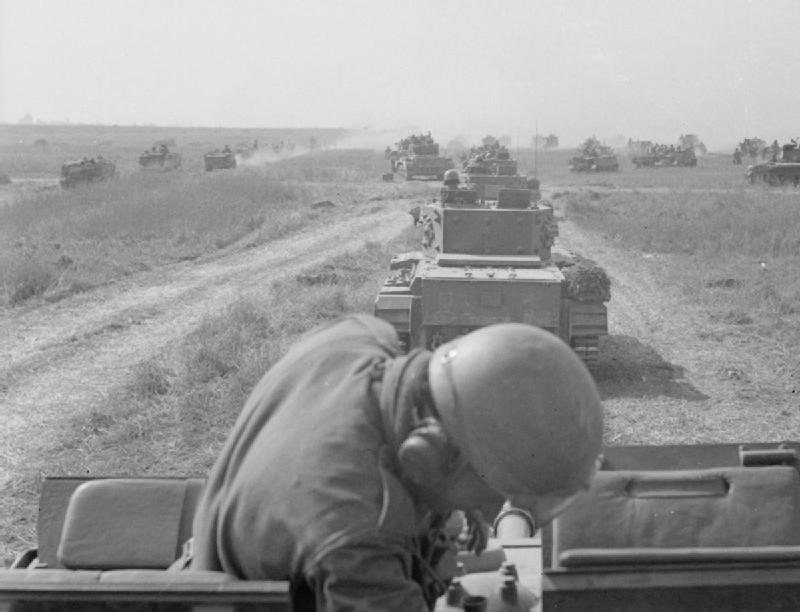
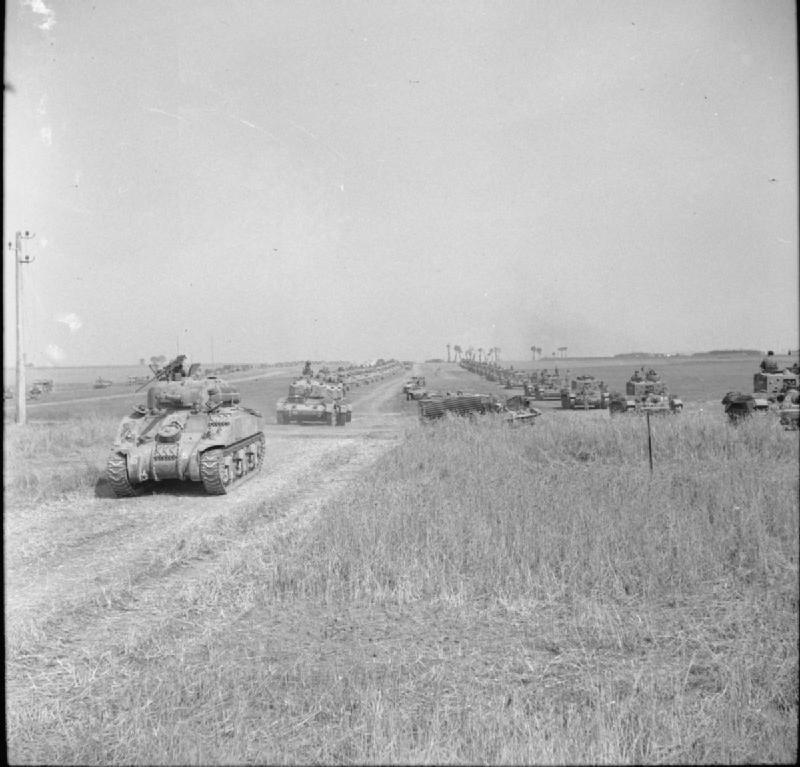
The two historical photographs in this guide show the division’s tanks in Normandy on 8 August 1944. They illustrate the setting of the campaign, rather than identify anyone in your family. Keeping that distinction is equally important when a research report uses a museum photograph alongside a personal document.
Unit histories and operational material can help explain a confirmed regiment’s activities during a known period. Their purpose differs from an individual personnel file. A unit account that describes an action does not automatically name every person present, and silence about an ordinary soldier does not establish that they were absent.
The Virtual Museum provides biographies as well as historical material about the division. These are useful published leads, but the collection should not be treated as a complete roll of everyone who served. A name missing from a website is a reason to investigate other sources, not a conclusion that the family account is false. Repository holdings and access must be checked for the particular unit and question.
Connect military service with later life in Britain
For many British families the central question is continuity: is the man in the Polish military paper the same person who later married, worked or died in Britain? Post-war correspondence and British civil records can connect these stages. A matching name without a link between the military and civilian identities leaves an important part of the account unproven.
Where the evidence indicates it, Polish Resettlement Corps records may provide a further stage of service. Do not assume enrolment merely because a veteran settled in Britain. Treat military service, resettlement arrangements and civilian residence as separate questions, each supported by the records available for that person.
Birth details in a service document may also lead back to family research in Poland. Preserve the place name as written and the date of the document before matching it to a modern map. Places with similar names and changed borders require care. Parents’ names, where recorded, can help distinguish the correct person in civil or parish records.
That connection can support a separate Polish family history investigation when you want to follow earlier generations. Military membership alone does not prove a particular parent-child relationship or establish a descendant’s citizenship entitlement. Those conclusions require their own documentary chain.
Commission a documented account of one soldier
A focused brief might ask us to establish the veteran’s identity, identify the regiment and reconstruct the service that surviving sources support. Send the names used in Poland and Britain, an approximate birth date and copies of relevant papers or photographs. Include any known service number and explain how the material came into the family.
Our military research service offers 10, 20 or 30 hours for one person. The investigation follows relevant evidence across Polish, British and international repositories. The English-language report explains the records found, gives references and includes copies where available and permitted. It should distinguish confirmed findings, probable leads and questions that remain unresolved.
Choose a package on the Polish military research service page. If you need guidance about the appropriate service, use the general contact form for the fitting service and price or a quote. A clear starting question helps keep the research centred on your relative rather than on a general history of the division.
Official and museum sources
- GOV.UK: records of a deceased serviceperson - Polish forces category, possible record contents, fees and access limits.
- National Army Museum: Totalise and the Falaise Pocket - The division in Normandy in August 1944.
- Virtual Museum of the 1st Polish Armoured Division - Training, campaigns, occupation and published biographies.