Monte Cassino Cross: Numbers, Recipients and Records
A Monte Cassino Cross number can help identify a Polish soldier through an award list. The number on the cross, the soldier’s service number and the name in the list must be checked together: they are different identifiers. For a British family with an inherited medal or a story about Italy, that comparison can connect a wartime unit with the relative who later lived in Britain.
The Polish Genealogist offers paid Polish military records research to investigate these connections. We compare medal evidence, personnel records and family details, and explain the findings in an English-language report with references and copies where available.
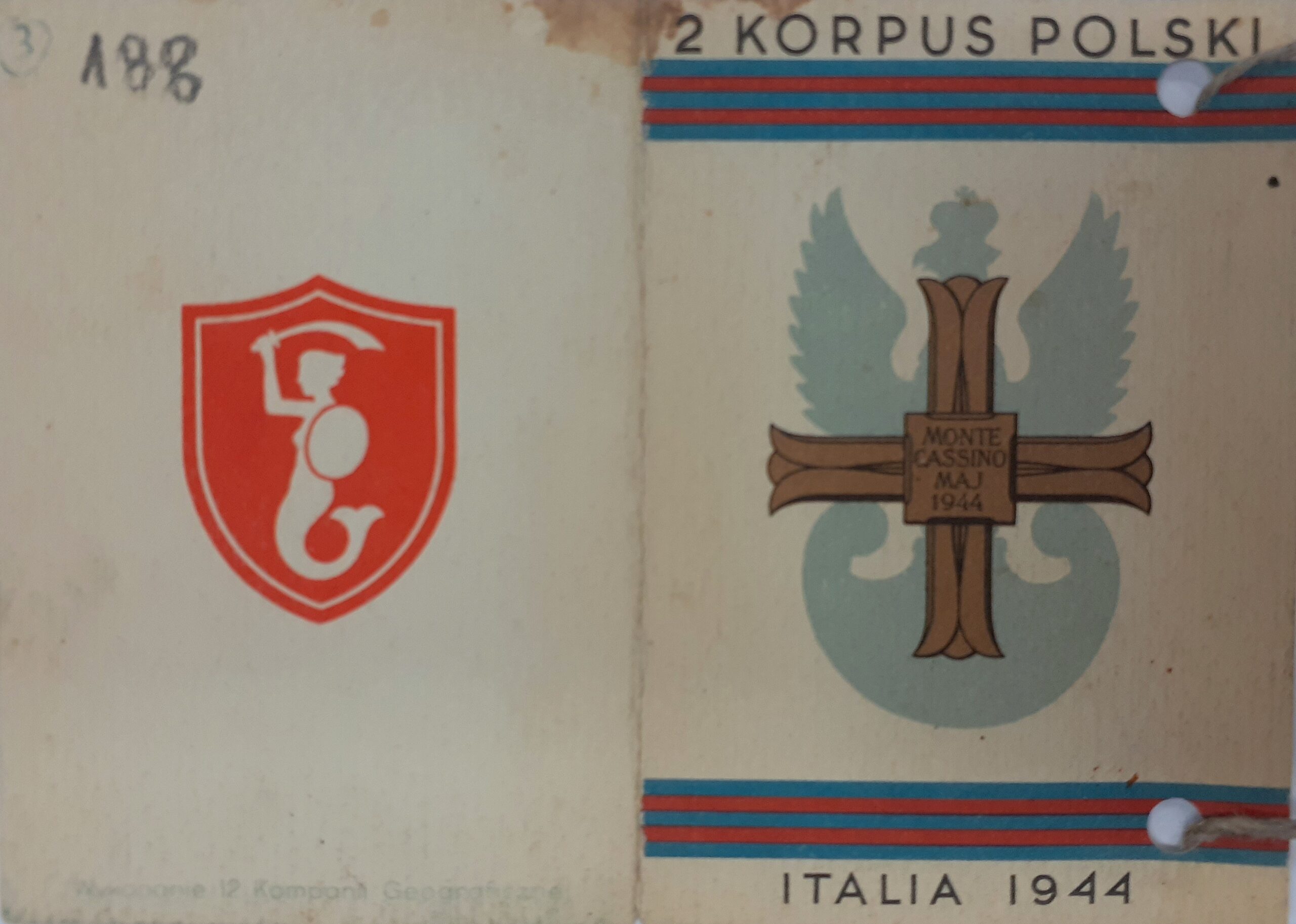
What a Monte Cassino Polish soldiers list actually records
There is an important difference between a list of Monte Cassino Cross recipients and a complete history of every person who served in the Polish 2nd Corps. An award list records a particular decoration. It is useful evidence for that purpose, but cannot answer every question about enlistment, transfers, wounds or post-war settlement.
Polish Exiles of WW2 publishes recipient-list resources organised alphabetically and by unit. Its description identifies fields including surname, given name, service number, rank, cross number and military unit where available. The project attributes the original lists to the Sikorski Institute in London. These published finding aids help locate an entry; the underlying record and other identifying evidence still matter.
A family researcher should distinguish three questions: is this name in the award material, is the entry the correct relative, and what does it establish about their service? An affirmative answer to the first does not settle the other two. Our broader Anders’ Army records guide explains the wider personnel and unit-record trail; this guide concentrates on the cross and its recipient.
Monte Cassino Cross numbers and service numbers
The cross itself provides a useful starting point. The Australian War Memorial describes a bronze example with a central inscription referring to Monte Cassino and May 1944, and an identifying number on the reverse. Its catalogue connects that object with Lieutenant Mikolaj Nikon. This is a documented museum example, rather than a claim about a client or an unidentified family medal.
Record the number exactly as it appears. Photograph both faces and any accompanying award document without polishing the surface or altering an unclear digit. If a photograph leaves one character uncertain, preserve that uncertainty in the transcription rather than silently choosing the most convenient reading.
- Cross number: the number associated with the decoration and checked against recipient material.
- Service number: the identifier recorded in military paperwork; copy the whole expression, including separators and letters.
- Archive reference: the identifier for a record or file, which is separate from both the cross and the soldier’s number.
A number on an inherited object does not by itself prove how the object reached the family. It may have remained with its recipient, passed through another relative or been acquired later. Any named certificate, envelope, photograph annotation or account of ownership should therefore be recorded alongside it. Physical possession and documented military identity are related questions, but each needs evidence.
How to match a recipient to your relative
A strong identification combines the award entry with details that already belong to your family. The same surname is a weak match when used alone. A matching service number in an independently held document is much more useful; a compatible birth date, unit and family connection can strengthen the conclusion further.
Keep the original Polish spelling as well as the version used in Britain. A missing accent or an English given name may explain a search difficulty, but a resemblance between two names should remain a hypothesis until the other details agree. The published alphabetical resource specifically notes its use of Polish diacritic letters.
Clearly illustrative example: a family knows a veteran as John and has an award document using Jan. If the document and the recipient entry carry the same service number, that is a meaningful link. If only the surname matches and the document has no number, more evidence is needed. This example describes a method, not a completed case or a particular recipient.
Compare contradictions as carefully as agreements. A different birth date might reflect an error, but it might identify a different person. A unit name may refer to a different stage of service. The report should explain the discrepancy, identify the sources involved and state what further evidence would resolve it, rather than replacing inconvenient details with an assumed answer.
What the cross proves about Monte Cassino service
The National Army Museum records that General Wladyslaw Anders’ 2nd Polish Corps secured Monte Cassino on 18 May 1944. The decoration relates to this campaign, but identifying a recipient does not provide a daily account of where that person stood or what they did during the fighting.
The National Museum in Szczecin’s description explains that eligibility extended to the fighting at Monte Cassino, Piedimonte and Passo Corno between 12 and 31 May 1944, and also to those wounded on the battlefield between 7 April and 11 May 1944. That scope matters when interpreting a family statement that someone received the cross for being at the monastery.
A confirmed award should be reported as an award. A claim about a particular action requires additional evidence connecting the individual with that action. Unit histories can explain the formation’s movements, while personal records may establish a posting or a period of absence. Neither should be stretched beyond what it actually records. A missing name in one transcription is also insufficient grounds to dismiss the family’s entire account.
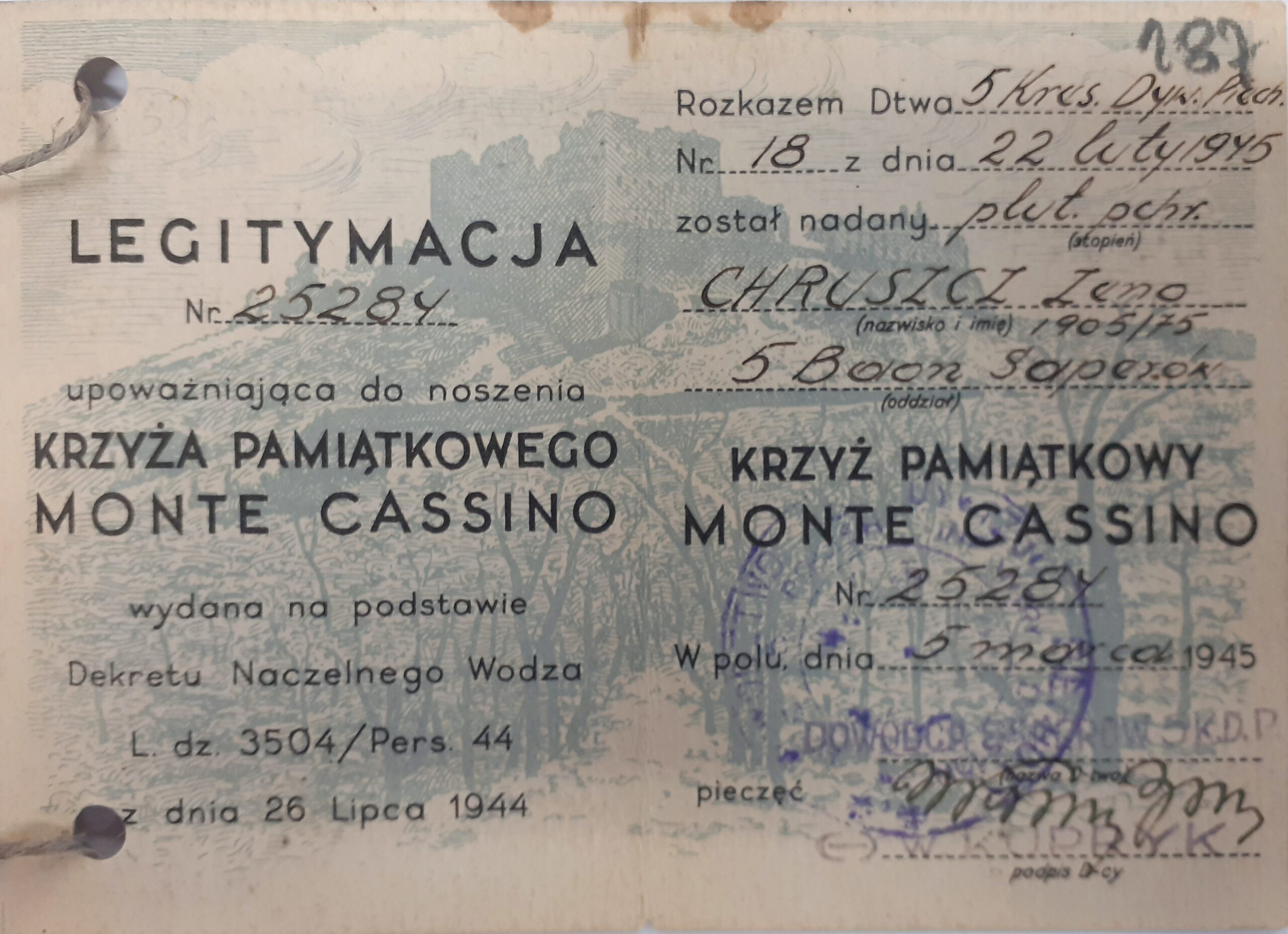
This publicly documented example belongs to Zenon Chruszcz. The inside pages place a named recipient, a unit and an award number together. The cover alone would not supply that identification. It is an illustration of the evidence to compare, not a client case or a match to your own relative.
The records behind the award entry
Research can combine award material associated with the Polish Institute and Sikorski Museum, available personnel documentation and the papers kept by the family. Each contributes something different: a roll may connect name, number and unit, while a personnel file may provide the birth details and sequence of postings needed to distinguish people.
Current GOV.UK guidance places the records of Polish personnel who served under British command in the Second World War with the Ministry of Defence. This is a separate category in its guidance. The British Army transfer rules should not automatically be applied to a Polish veteran’s file. Our guide to MOD Polish service records explains this distinction in more detail.
Access and disclosure can limit the result. GOV.UK states that some service records provide little or no information, and that information may be withheld. At the time of writing, 8 October 2026, MOD record requests carry no official request fee. Our charge is for commissioned research, comparison and reporting; official records are not an exclusive resource available only through us. Archive copies or other external charges are discussed where applicable.
From a wartime soldier to a family in Britain
For a British descendant, the research question often continues beyond Italy: is the name in the award material the same person who married, worked or died in Britain? Post-war papers, personal correspondence and British records can supply the connections between those stages of life. A matching name without those connections leaves a gap in the family history.
Where the evidence points to resettlement, Polish Resettlement Corps records may contribute another stage of the trail. Service in the 2nd Corps and later enrolment in the Resettlement Corps should be recorded separately. One should not be assumed solely from the other.
A place of birth in a personnel document can also identify the next family-history question in Poland. Preserve the original place name and the date of the record before interpreting it against changing borders or present-day maps. Parents’ names, when recorded, help connect the soldier to civil or parish evidence. A military award does not by itself establish family relationships or a descendant’s citizenship entitlement.
Commissioning research into a Monte Cassino recipient
A useful brief asks us to identify the recipient, test the connection to your relative and reconstruct the service that surviving sources support. Include the name used in Britain, any Polish version, an approximate birth date, the cross number if known and photographs of relevant papers. You can commission research even if the medal itself has not survived.
Our military research service offers 10, 20 or 30 hours for one person. The work follows the available evidence across relevant repositories and explains it in English. A report should distinguish a verified match from a probable lead, show the references behind its conclusions and identify gaps. Copies are included where available and permitted. No package guarantees that a particular file survives or that every stage of service can be reconstructed.
Choose the relevant package on the Polish military research service page. If you have questions about the appropriate service, use the general contact form for the fitting service and price or a quote.
Official sources and published recipient lists
- National Army Museum: the Italian campaign - historical context and the capture of Monte Cassino.
- Australian War Memorial: Lieutenant Mikolaj Nikon’s Monte Cassino Cross - a catalogued, numbered example.
- National Museum in Szczecin, In museums: Monte Cassino Commemorative Cross - scope and dates of award eligibility.
- GOV.UK: records of a deceased serviceperson - Polish forces category, fees and disclosure limits.
- Polish Exiles of WW2: Monte Cassino Cross recipient resources - independently published finding aids, their fields and stated archival origin.