Polish Milk Bars: What Is a Bar Mleczny?
A Polish milk bar, or bar mleczny, is a canteen serving everyday meals at a counter. You might order soup, pierogi, potato pancakes or a plate of dumplings made with fresh curd cheese. The name comes from the importance of milk and dairy dishes in early menus. Today the choice can also include meat, depending on the kitchen.
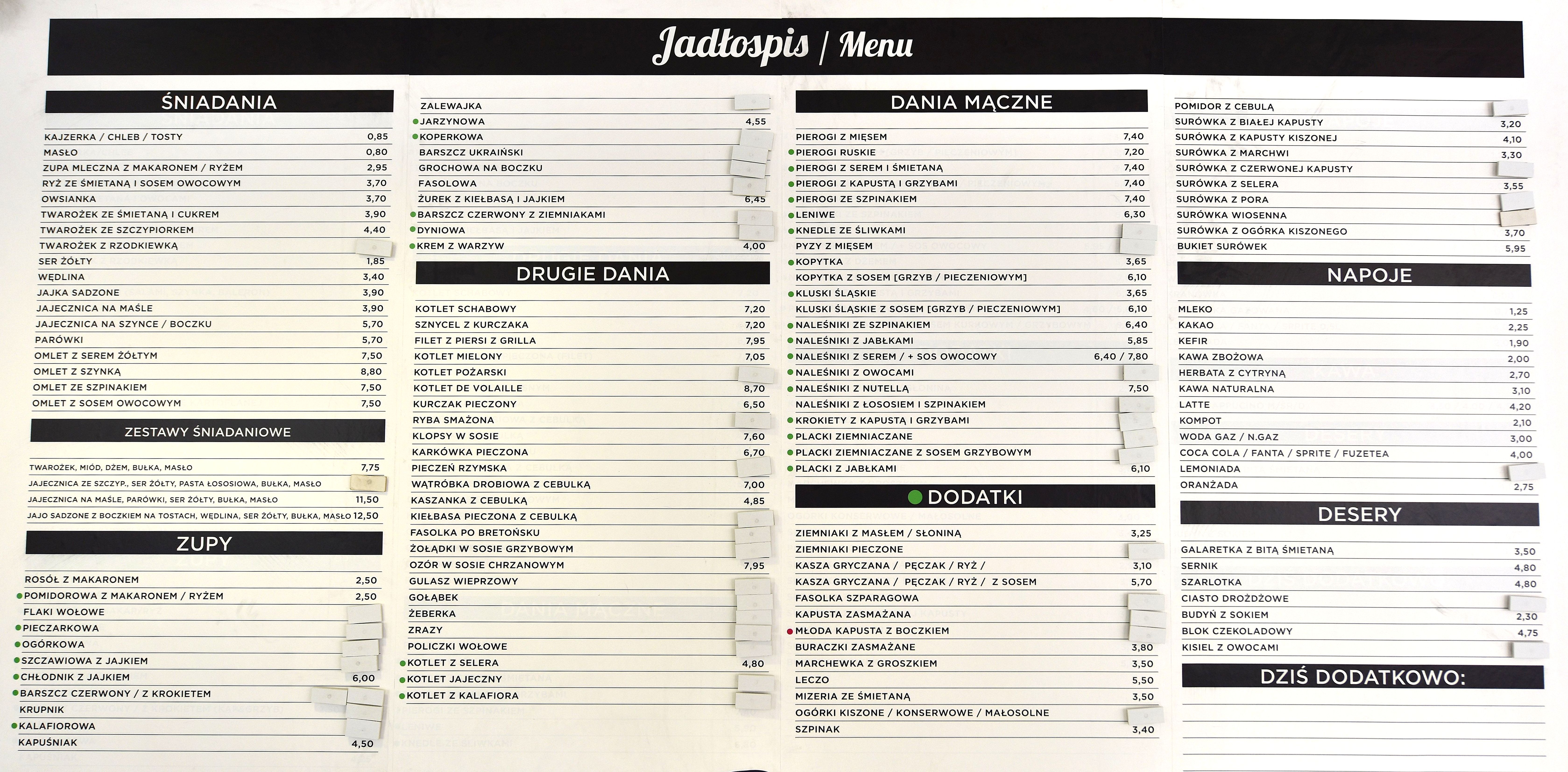
The dining room is often simple, and ordering can be quicker than at a restaurant with table service. A board behind the counter tells you what the kitchen offers. Look for the names of the dishes you want, then check how that particular bar takes orders and calls people to collect them.
Why is it called a milk bar?
Milk, soured milk, cheese and eggs could make a meal without the expense of meat. They were natural ingredients for the kind of straightforward dishes early milk bars served. A plate of dumplings with curd cheese, or potatoes with soured milk, makes more sense of the name than the idea of going somewhere just to buy a glass of milk.

The name can puzzle British readers because it has been used for different businesses in English-speaking countries. In Poland, look for the words bar mleczny together. Bar by itself covers a much broader range of places. In the canteen, a lunch menu and a serving counter usually make the purpose clear as soon as you walk in.
Menus could be displayed rather than handed to each customer. A large board made it possible to see the dishes while queueing. In a room with more than one window, it also helps to distinguish the till from the place where food is collected. The words kasa and wydawanie may be useful clues.
The name survived even as menus changed. One bar may offer a range of meat dishes while another has several flour, egg or dairy-based choices. If you are looking for a particular dish, the menu is a better guide than the name over the door.
Where did Polish milk bars come from?
Polish accounts often trace the format to a Warsaw business opened by Stanisław Dłużewski in 1896. A dairy-led menu was a way to serve an affordable meal in the city. The idea had already taken hold before the period commonly associated with milk bars, the Polish People’s Republic or PRL.
During the state-socialist decades, milk bars became part of a much larger network of collective dining. A worker, student or pensioner could eat a hot meal without making it at home or sitting down for formal service. The counter and limited menu worked for a large number of people with limited time at lunch.
Different generations remember this arrangement differently. For one person, the attraction was a familiar dish near their workplace. For another, the place was simply somewhere to eat between classes. Ask what someone ordered, who went with them and how far they walked to get there. Those details tell you more about their daily life than the label PRL by itself.
What to order at a bar mleczny
Start with the main categories. Zupy are soups, such as tomato soup or a soup of soured cucumbers. Pierogi are filled dumplings. Pierogi ruskie usually have a potato and curd-cheese filling. Placki ziemniaczane are potato pancakes, while naleśniki are thin pancakes that can come with a sweet or savoury filling.

Leniwe, sometimes called pierogi leniwe, are a different kind of dumpling. The curd cheese is mixed into the dough, so there is no separate pocket of filling to open. They can be served with sweet toppings. The word leniwe literally means lazy. You may also see kopytka, which are potato dumplings. On a translated menu, both can simply appear as dumplings, so the Polish names help you tell them apart.
A full lunch may come with separate sides. Ziemniaki are potatoes and surówka is usually a salad of raw vegetables. Kompot is a drink made from fruit cooked in water. You can often order a soup on its own, choose a main with a side or add something to drink. What appears on a printed or photographed board records the choices at a particular place and time.
How to order and collect your food
Read the board before reaching the till. If you know the name of the dish, poproszę followed by the name is a polite way to ask for it. You can also point to the item if you are unsure how to pronounce it. Look for markings that tell you which dishes are available that day and ask if anything has sold out.

After paying, keep the slip if one is issued. Some places use a number or a named dish at the serving window, while others explain where to wait as part of the order. A dining room may have a place to return the tray and dishes. The quickest way to learn the routine is to watch what happens at the counter before your turn.
If you see the phrase danie dnia, it means dish of the day. Dodatki are additions or sides. A photographed menu is useful for learning vocabulary before you go, while the board in the room tells you which choices the kitchen is actually serving. At a busy lunch counter, deciding on a first and second choice can make the exchange easier.
The menu can be written in shorthand. A board may group a plate of food under zestaw obiadowy, or lunch set, and use short labels for side dishes. If an ingredient matters to you, ask about it directly. A soup name on its own may not tell you what stock it was made with. The appearance of a dish tells you even less about everything that went into it.
What old menus and meal tickets can tell you
A meal ticket might say bon obiadowy. The ticket illustrated here carries the name of an Opole canteen and a printed date. Compare that with a menu board, where the names of dishes can be clearer than the date. A pair of records can answer more than either one on its own.
A menu is a small record of everyday life. Read the business name and address, the categories of food and any date separately. A photograph of the board can help you remember the sequence of a meal. A loose ticket or receipt can preserve a business name even when the place has moved, changed its sign or closed.

Imagine that a family in Britain has a small meal voucher tucked into an envelope of pictures from Poland. One relative remembers eating near a railway station. The name on the voucher gives you a business to locate. A picture of a street corner may tell you which visit the paper came from. Keep the association tentative until a date or a note ties them together.
Some things cannot be inferred from the paper alone. A ticket does not tell you who ate the meal or whether they worked nearby. An address shows where the business operated when the ticket was printed. Write down who found the papers and what was kept with them. That gives you a way to test later recollections against the material in front of you.
How Polish canteen food travelled with families
Pierogi, soup and potato pancakes could be made at home as easily as ordered from a counter. A relative might remember leniwe from a school dining room and another might recognise the same dish from a parent’s kitchen. Ask where they first ate it and which Polish name the family used. A recipe may have travelled without the memory of the canteen, or a restaurant may have kept the name for a dish cooked differently at home.
In Britain, a community kitchen or Polish club can have its own menu and serving routine. Our guide to Polish food in Britain follows the shops, clubs and family meals through which those dishes continued to be made. A food story can also carry an address, a workplace or a relative’s full name, which gives you a separate line of inquiry.
If family papers point to a person and a locality in Poland, our research can follow that lead into civil, parish and other archival records. We explain what the records establish in English and provide copies where available. A scan of both sides of a small piece of paper can be as useful a starting point as a carefully labelled photograph.