Bonegilla Migrant Records: Tracing a Polish Family
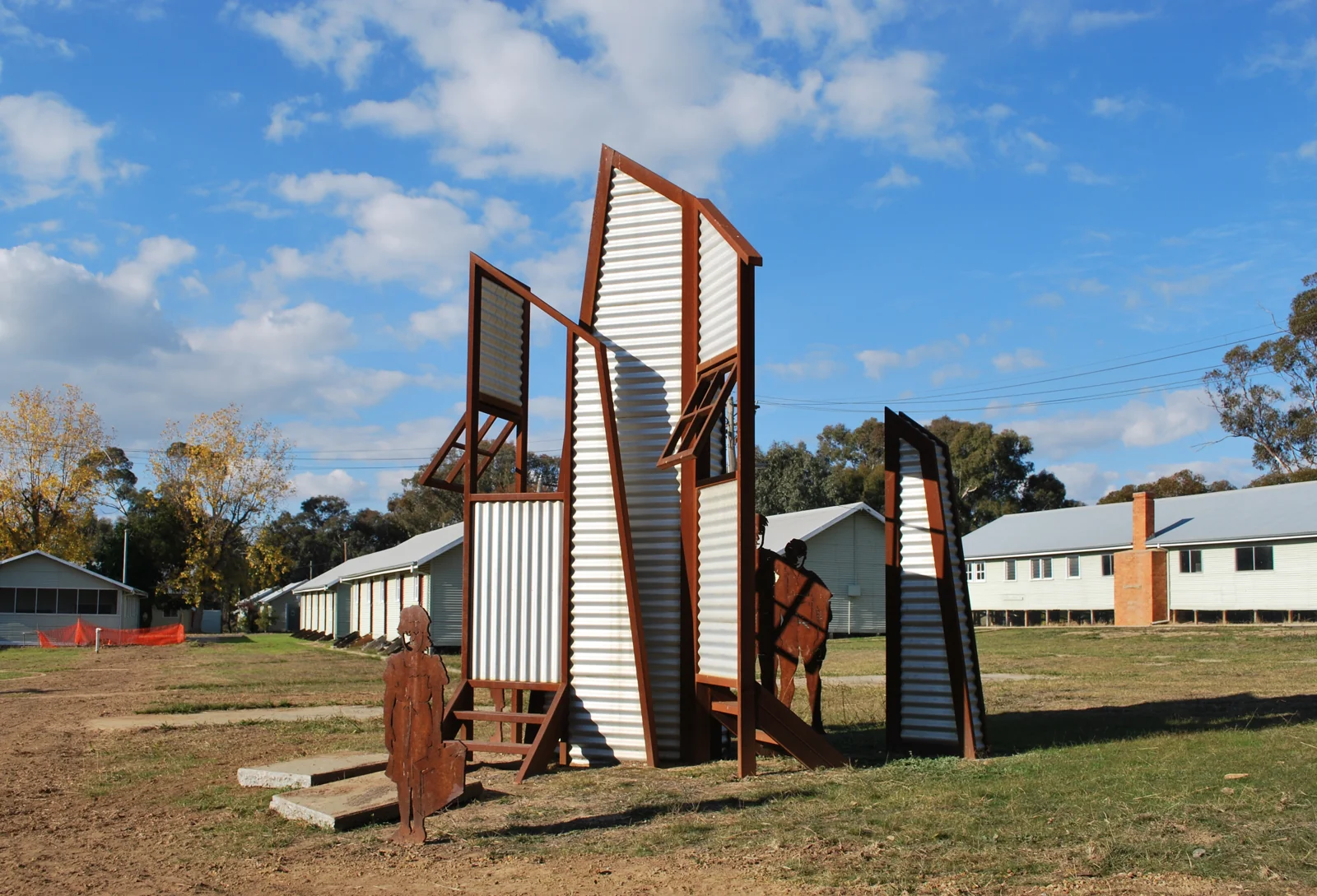
Bonegilla family connections
A camp card is one chapter of a longer family history.
The arrival, family names or place recorded on a card may connect an Australian life with earlier Polish records. The next discovery starts with identifying what the evidence actually says.
See the clues worth followingBonegilla migrant records can provide a link between a family’s arrival in Australia and the names, places and relationships needed for research in Poland. An identity card belongs to the person’s experience at the centre. Migration selection papers concern the process of migrating. Reading them as different sources helps build a clearer account of the same family.
For descendants of Polish migrants, the most useful result is often a reliable connection to an earlier locality or relative. We use those clues from family-held material to investigate the Polish part of the family history. A camp record can be a valuable starting point, but identifying the correct person and understanding each field come before extending the family tree.
What your family papers may reveal
Read the card
Separate arrival, departure and personal details before drawing conclusions.
Reconnect the family
Compare relatives and name variants with the papers your family holds.
Find the Polish connection
Use a supported locality or relationship to define the next investigation.
What Bonegilla identity cards and migrant records contain
The Bonegilla Identity Card and Memory Collection describes cards recording arrival and departure information, a ship or flight and a residential block, among other details. Its family research guide also discusses personal particulars and the way children may appear in the records. Fields are not always complete. The absence of a departure entry should not be converted into a firm statement that someone stayed indefinitely.
Read the headings before transcribing the entries. A date beside a movement or issue may describe an administrative event rather than the person’s birth. Preserve the layout in a complete image and make your reading in a separate note. This allows someone checking the family history to see why a date was assigned to a particular event.
The card is strongest when used to answer a defined question: is this the right person, which arrival is recorded, or who appears with them? Avoid making it carry a whole biography. A birthplace, a relative and a later destination can each lead to another source, but each connection still needs to be supported.
Identify the person before joining the family tree
Begin with the name and compare it with the family member’s known age, spouse, children and arrival period. A shared surname is only one part of an identification. If the card has a different date from the one remembered at home, record the disagreement rather than choosing whichever date makes the proposed match look more convincing.
Keep original and later name forms together. A given name used in Australia may differ from the name written in Polish family documents. Handwriting and copied spelling can introduce another variation. The museum’s guidance recommends allowing for spelling differences; a plausible variant is a reason to inspect a candidate, not a reason to accept it without comparison.
Make a brief identity note for the person you are researching: the established facts, the card’s relevant particulars and the unresolved differences. This is especially helpful when several candidates appear in the same period. An unconfirmed card can remain in a working file without being presented to relatives as the missing ancestor.
Family groups and children need careful reading
A child’s record may need to be understood through a parent’s card rather than a separate result. Bonegilla’s published research guide specifically notes that children were listed on parents’ cards from 1957, normally on the mother’s card when the family arrived together. The recording practice matters when interpreting an unsuccessful name search or an apparently incomplete family group.
Transcribe the relationships actually stated. Two people on connected paperwork may be spouses, parents and children, or have another administrative connection; proximity in an index is not sufficient by itself. Preserve maiden surnames where they are available and distinguish the person whose card you are reading from relatives merely mentioned within it.
A practical family note might separate the named cardholder from the other people recorded and list the source of each relationship. Later, a Polish birth or marriage entry may corroborate the connection. Until then, an ambiguous household should remain ambiguous. This prevents a useful camp record from becoming the source of several unsupported generations.
Connecting Bonegilla records with Australian passenger arrivals
A ship name and arrival date can help distinguish the right migrant from someone with a similar name. They can also connect papers that appear unrelated when viewed separately. Check whether the dates describe the voyage, arrival in Australia or admission to the centre. Those events need not have occurred on the same day, and a difference is not automatically an error.
Migrant selection documents may add family and biographical particulars to the camp information. National Archives of Australia guidance describes such records and their variable contents. An index entry tells you a file exists; it does not establish that you have seen every page or that all parts are open and digitised. Do not write a detailed account from the catalogue title alone.
For the Australian arrival, our Australian passenger lists guide covers lists and arrival cards. Our Polish passenger lists guide discusses how a travel record fits into family research. If earlier papers refer to a European displaced-person camp, the DP records guide provides the next context. Neither source should be used to assume an individual’s route without their own evidence.
Turn a Polish place name into a research location
A recorded locality can become the key to Polish research, but it needs to be identified at the right geographical level. Is it the place of birth, the family’s last home or the location where a document was issued? Copy the field label together with the place. The answer determines what kind of Polish record would be relevant.
An unfamiliar spelling should be compared with the document date, surrounding details and other places associated with the family. Several settlements may share a name. A later country label may differ from the historical setting in which a record was created. These are reasons to investigate the locality carefully, rather than select the first matching name on a modern map.
In an illustrative example, a fictional migrant’s card and an older family letter might give two spellings of a village, while a marriage paper names the same spouse. The research objective would be to identify the locality and test the couple in the appropriate records. This is a method example, not a description of a completed commission.
What Polish research can add to a Bonegilla record
The camp record documents one period of a life. Polish civil and parish sources can address earlier relationships: the person’s parents, a marriage or a connected generation. Which records are suitable depends on the locality, dates, religious community where relevant, survival and access. A promising clue does not mean every category of source exists for that family.
Our family-history research service follows an agreed line or question and explains its findings in English. You may want to establish the migrant’s parents before extending an earlier generation, or resolve a place before investigating relatives. Copies are included where available and permitted, with references and an explanation of how the evidence connects.
The guide to tracing Polish ancestors from Australia describes how to define that commission. This work is not an Australian archive-ordering service. It uses the Australian evidence your family holds to direct research in Polish and relevant continental sources, with the boundary of the agreed work made clear.
Keep the evidence and its gaps visible
Retain the original card image, any catalogue identification you have and the source of related family papers. Keep a transcription separate from interpretation. If a word is uncertain, mark the reading as uncertain and preserve a close view of the handwriting. A confident-looking typed family tree should not conceal a doubtful surname or place.
Record what a missing field actually means: no answer was entered or none is visible on the copy. It does not automatically mean the person had no spouse, no employment or no onward destination. Similarly, a missing online result does not establish that the person never passed through Bonegilla. Indexing, recording practice and the available material all affect the result.
When commissioning the Polish investigation, identify the question that matters most and the records already checked. That prevents the same uncertainty being repeated as an established fact. The aim is to connect a documented Australian stage with a supported Polish family line, leaving the reader able to distinguish evidence from a reasonable but unconfirmed possibility.
Official sources
Sources checked on 28 October 2026. The institutional guides describe their own collections; the research examples above are illustrative and do not describe completed client cases.