Australian Passenger Lists: Tracing Polish Migrants
Ships, arrivals and family clues
Start with the voyage. Follow the person.
A ship name or arrival date can anchor a family story. The useful next step is connecting the passenger with the right relatives, places and earlier records.
See the clues worth followingAustralian passenger lists and arrival cards can place a Polish migrant on a particular voyage and help distinguish them from someone with a similar name. They record a movement, not a complete life history. A port, a ship and a date become useful when they are connected with the same person’s other family papers.
Our research follows the Polish clues in arrival material your family already holds into an agreed investigation in Polish and relevant continental sources. This guide concentrates on the Australian arrival side of the evidence. The existing Polish passenger lists guide considers the wider travel-record context; the two should be used for their different parts of the enquiry.
What your family papers may reveal
Establish the voyage
Compare the ship, port and arrival date as a set.
Recognise your relative
Test names and accompanying family against other evidence.
Look beyond the landing
Follow a birthplace or family connection into Polish sources.
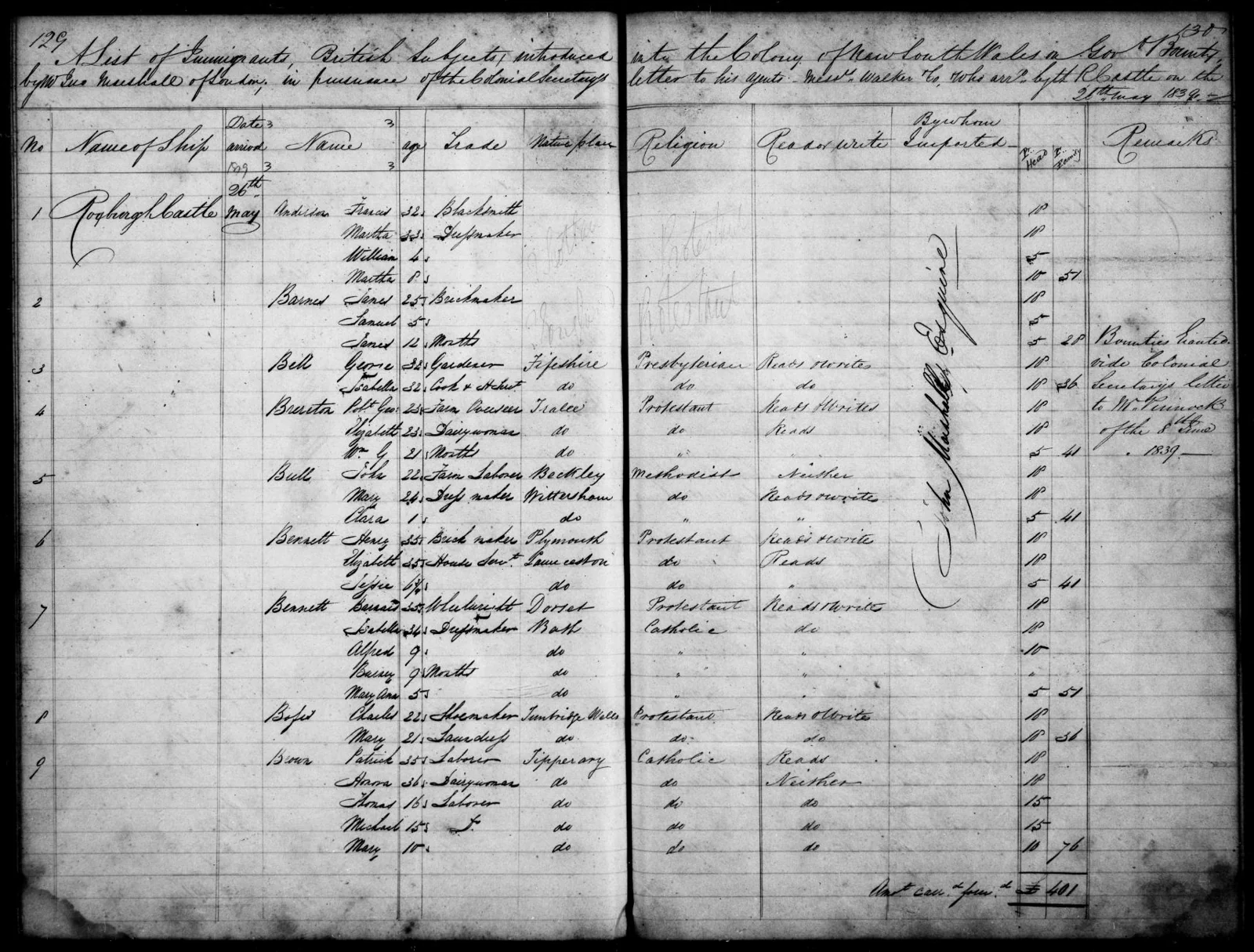
Australian passenger lists, arrival cards and selection papers
A passenger list is a list of people associated with a particular movement, while a passenger card is an individual form. The National Archives of Australia describes the gradual change in record formats: air passengers completed cards from 1948, and cards replaced ship passenger lists in 1965. The source expected for an arrival therefore depends on the period and type of travel.
Migrant selection documents concern a different stage. They may contain biographical and family details associated with an application to migrate, rather than simply record the voyage. A nominal list, a selection file and a camp card can all relate to one person without being duplicate versions of the same record.
Label the material you have before comparing it. For each item, note the person, document type, date and event recorded. This simple distinction prevents an application date from being entered as the arrival date, or a camp admission from being described as the moment the family first reached Australia. The sequence should follow the documents, not an assumed route.
Passenger arrival records: National Archives and index coverage
The National Archives describes detailed passenger records for Australian ports from 1924, with earlier exceptions and state or territory archives relevant to other earlier arrivals. Its passenger index has its own coverage, which varies by port, mode of travel and period. The date range of an index is not a promise that every Australian arrival within those years can be found by name.
Distinguish three questions: does the relevant record survive, has it been described in the catalogue, and is the person’s name searchable in an index? A negative answer at one level does not settle all three. A record may need to be understood through a voyage description even when the name search has not supplied the expected result.
Keep any catalogue reference or source description with the image you already hold. If a family member supplied a transcription, record whether the underlying page was seen. A short index entry is useful for locating evidence, but it should not be presented as though it contains the entire passenger record or all of its annotations.
Use the ship, port and date together
A ship name is not sufficient to identify one voyage. The same vessel can make several journeys, call at different ports and appear in unrelated records. Compare the name with the arrival period and the particular Australian port. Be clear whether a date refers to departure overseas, first arrival in Australia or a later call elsewhere in the country.
A difference between two arrival dates may be a question of which port or event was recorded. It can also reflect a transcription error or the wrong voyage. Preserve both readings until the underlying evidence has been compared. Do not select a date simply because it agrees with a remembered year of migration.
Create a concise voyage note: the person, recorded vessel, relevant date, port and source. Add an uncertainty where a field is missing. For a fictional example, two family papers might record different Australian ports during the same voyage. The research task is to establish that sequence, not assume the family travelled twice. This is a method example, not a reported client discovery.
Identify relatives without relying on surname alone
Compare names with age, a spouse, children and other details actually recorded. Keep a maiden surname and later name forms in view. A family-held Australian naturalisation record may offer another name or date to compare. An initial or abbreviated given name may need supporting evidence from another document. A familiar surname on the right ship is a candidate to investigate, rather than a complete identification by itself.
People next to one another on a list are not automatically members of the same household. The list may have been organised for a purpose that does not reflect family relationships. Read any stated relationship and corroborate it with the family’s other records. Where the source gives no relationship, preserve that absence rather than infer one from page position.
Do not confuse a passenger with a crew member or a person merely mentioned in later correspondence about the vessel. Identify the document’s subject and purpose. A useful family account explains why the entry is attributed to the ancestor and which facts support that conclusion. That reasoning matters when a later Polish search depends on the identification.
Connect the arrival with Bonegilla, Greta or earlier Europe
An arrival record can anchor one point in a longer chronology. A later camp card or family address may establish where the person went next, but the route needs evidence of its own. Do not assume every Polish migrant passed through the same reception centre or travelled under the same migration arrangement.
Our guides to Bonegilla migrant records and Greta family-history sources address those specific settings. Use them where the family’s documents or reliable recollections give a reason to investigate the centre. A shared nationality and arrival decade do not establish residence at either place.
Selection papers or earlier displaced-person material may identify a European address or relative useful for the Polish enquiry. Keep an arrival event separate from the earlier wartime history. Knowing that a person came from a European camp does not establish their military service or every experience before migration. The DP records guide discusses that earlier evidence.
Follow the family clue into Polish sources
A birthplace can direct Polish research only when its meaning and locality are clear. Copy the heading with the entry, and distinguish a place of birth from nationality, last residence or intended destination. If a form records only Poland, that does not identify a parish or registry office. Another family document may be needed to narrow the location.
Names, ages and relatives can help test a possible locality. Historical spelling and changing borders may affect which place is meant and where the surviving records are held. The investigation should establish the location before treating a particular archive as the inevitable holder of the ancestor’s birth entry.
Once the person and locality are supported, Polish civil, parish or other relevant records can be considered for the next family relationship. Our guide to tracing Polish ancestors from Australia explains that step. A commissioned report should show how the arrival evidence connects with the Polish finding, rather than present unrelated documents as a single established family story.
Commission the Polish research and keep the record types clear
The family-history service investigates an agreed line or question using the evidence you already hold and relevant Polish or continental sources. It does not include obtaining Australian government arrival files or issuing official proof of arrival. Questions about a present-day administrative requirement should be distinguished from a historical family investigation.
Home Affairs’ movement-record service for personal travel from 1981 is a separate product from historical passenger material in the National Archives. A family tree, a historical list and an official movement statement are not interchangeable. Identify the purpose of the request before deciding what document would actually answer it.
For a family-history commission, provide the arrival details, the papers already available and the Polish question you want to pursue. Our research service reports the findings in English with references and copies where available and permitted. The aim is a supported connection between your Australian ancestor and the earlier family, with unresolved points identified honestly.
Official sources
Sources checked on 28 October 2026. Requirements should be confirmed for the specific record and intended recipient.